Content from the Journal of the American Neurological Surgeons.
Carolyn Elaine Reed, M.D. died on November 16, 2012 in Charleston, South Carolina following a short but courageous battle with cancer. Dr. Raymond S. Greenberg, President, MUSC stated, “Dr. Reed was the consummate clinician – dedicated to the complete care of her patients. Many of them developed close personal relationships with her, not just because…
Surgery for Emphysema Professor Robert J. McKenna, Jr., MD is Medical Director of Thoracic Surgery and Trauma at Cedars-Sinai, Los Angeles, CA. He pioneered the anterior approach for VATS lobectomy and has by far the largest experience in this technique. However, he has also served as the principal investigator on several trials, including the Z0030 trial on lymph node staging…
Patient Selection Esophageal diverticula are acquired conditions almost always occurring in adults where the epithelium-lined blind pouch arises from the esophagus. They are categorized primarily by anatomic location and etiology into pulsion and traction diverticula. Zenker and epiphrenic diverticula are false diverticula, while midthoracic diverticula are usually traction diverticula that occur secondary to mediastinal inflammation…
Taped at the STS 49th Annual Meeting in Los Angeles, this roundtable discussion focuses on transcatheter aortic valve replacement (TAVR) and the role surgeons and the entire heart team play in the TAVR procedure. Moderated by Michael J. Mack, MD, speakers for this discussion include Wilson Y. Szeto, MD, Neal Kleiman, MD, and Vinod H.…
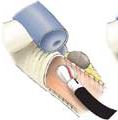
Figure 1: Olympus BF-UC160F-OL8 endobronchial ultrasound bronchoscope. Saline filled syringe attached to balloon inflation port. Mediastinoscopy is the ‘gold standard’ method for determining the presence of nodal metastases in the mediastinum. Generally performed as an outpatient surgical procedure, it is associated with a low rate of serious adverse effects (<1%) and the procedure is highly…
Patient Selection The surgical management of patients with tetralogy of Fallot and significant right ventricular outflow tract obstruction (RVOTO) remains controversial. For patients who have a congenitally small pulmonary valve annulus who are not candidates for a valve-sparing repair, there have historically been two options: (1) transannular patch or (2) valved conduit insertion. The advantage…
Patient Selection Anomalous origin of the left coronary artery from the pulmonary artery (ALCAPA) is a rare congenital anomaly that is one of the most common causes of myocardial ischemia and infarction in children. If untreated, it results in a mortality rate of up to 90% within the first year of life. In the current…
Patient Selection The “sutureless” neoatrium technique was initially described for anastomotic stenosis occurring after repair of total anomalous pulmonary venous connection (post-repair pulmonary vein stenosis, PRPVS). The procedure is also helpful in patients with congenital pulmonary vein stenosis and has been used in selected patients on the initial presentation of total anomalous pulmonary venous connection. …
Brom’s three-patch aortoplasty is indicated for the repair of supravalvar aortic stenosis, which can occur as an isolated defect or as a part of Williams syndrom. This syndrome is characterized by supravalvar aortic stenosis, elfin craniofacial features, peripheral pulmonary artery stenosis, and hypercalcemia. Patient Selection Brom’s three-patch aortoplasty is indicated for the repair of supravalvar…
Editor Note Patient Selection This procedure was introduced for the management of patients with complex transposition of the great arteries (TGA) with a ventricular septal defect (VSD) and pulmonary stenosis (PS). The technique has proven especially useful in the subset of patients with anatomic variables that complicate the performance of a Rastelli repair, which include:…
Editors Note Patient Selection The superior cavopulmonary anastomosis is the first of two operations used in a staged Fontan approach for definitive palliation of functionally single ventricle hearts. It was introduced into the palliative strategy to reduce the volume load on the hypertrophied single ventricle that pumps in parallel to the pulmonary and systemic circulations.…
Editors Note Patient Selection The completion Fontan operation is, as the name implies, the final stage of palliation for patients who have had previous surgery to address various types of single ventricle congenital heart disease. The first operation typically performed during infancy consists of techniques to regulate pulmonary blood flow (PBF) either with a pulmonary…
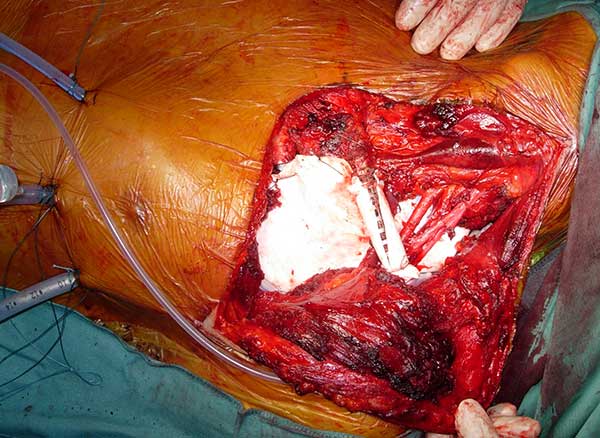
The anterior cervicothoracic approach was used to remove a desmoid tumor of the thoracic outlet in a 70-year-old male. The chest wall was reconstructed with titanium bars and a polytetrafluoroethylene-patch. The clavicle was fixed using a titanium clip. The postoperative period was uneventful. Desmoid tumors (DTs) are rare neoplasms belonging to the group of soft…
We first demonstrate the key features of congenitally corrected transposition, namely the discordant connections across both the atrioventricular and ventriculo-arterial junctions. The two discordant connections cancel each other out, so that potentially the circulations are congenitally corrected. In the heart shown in this videoclip, the septal structures are intact, so that indeed the circulations are…
In the second videoclip exploring congenitally corrected transposition, we show a specimen in which the potentially corrected circulatory patterns are uncorrected to a degree by the presence of a ventricular septal defect. More than half the patients with congenitally corrected transposition have deficient ventricular septation, and as in the heart shown, most usually the defects…
In one-third of patients with congenitally corrected transposition, there can be co-existing pulmonary stenosis. As explained, although it is stated that no heart exists in the Idriss archive with this lesion, this is not the case, and such a heart in shown in the next video clip. In this video, however, we show the extreme…