Content from the Journal of the American Neurological Surgeons.
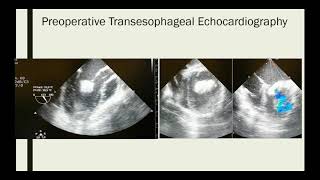
A 14-year old boy was referred to the coronary artery anomalies program after an incidental echocardiographic finding of a right coronary artery (RCA) arising from the left coronary sinus. The patient was evaluated and managed following a standardized approach: anatomy was determined by computed tomography angiography (CTA) and myocardial perfusion by stress cardiac magnetic resonance…
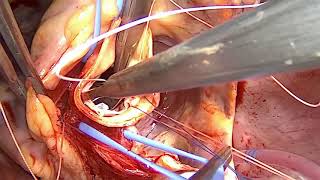
Introduction Aortic valve repair is emerging as a beneficial alternative to aortic valve replacement in the treatment of aortic regurgitation, offering young patients the possibility to eliminate the risks of complications associated with prostheses, including thromboembolisms, prosthetic endocarditis, hemorrhages associated with anticoagulation, and the need for reoperation due to structural degeneration of the prosthesis, among…
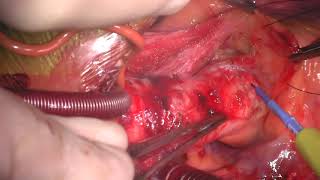
Coarctation of the aorta is often associated with bicuspid valve disease and aortopathy. This video demonstrates the techniques required to treat all of the pathologies in a single stage with an aorta to descending thoracic aorta bypass and aortic root replacement in a patient presenting with severe dyspnea and shortness of breath. Disclosure Dr Brinster…
Filmed at the 2020 STS Annual Meeting in New Orleans, Louisiana, Jessica G. Y. Luc of the University of British Columbia moderates a discussion on nontechnical skills for cardiothoracic surgery. She is joined by Jason J. Han of the University of Pennsylvania, Patrick O. Myers of the Centre Hospitalier Universitaire Vaudois in Switzerland, Mara Antonoff…
The incidence of primary cardiac tumors is extremely rare in pediatric population, ranging from 0.027% to 0.08% in autopsies. The majority of these tumors are benign, being the rhabdomyoma, the most prevalent histologic type (1). Rhabdomyomas are generally multiple, can affect both ventricles indistinctly, and could have a spontaneous regression in smaller lesions. Management of…
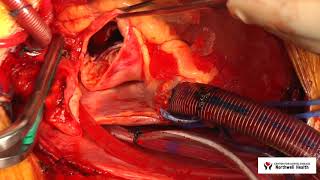
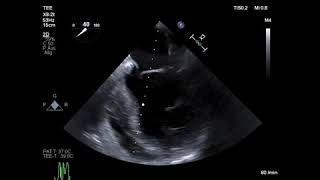
A 58-year-old man with a history of aortic valve repair “aortic valvotomy” at the age of 12 presented with dyspnoea, orthopnoea (NYHA IV), and bilateral lower limb oedema. His pro BNP was 4287ng/l. TTE und TEE showed low EF 20%, severe AS, AVA 0,5 cm2, DG 77/47, AI II, LVEDD 65 mm, LVESD 55 mm,…
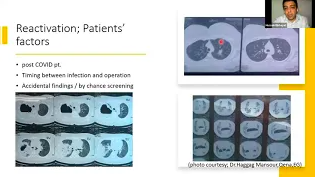
Introduction The novel severe acute respiratory syndrome coronavirus 2 (SARS-CoV2) responsible for the coronavirus disease 2019 (COVID-19) is causing a global public health crisis. The World Health Organization (WHO) declared it a pandemic on March 21, 2020. As of this writing, it has affected a total of 20,144,884 cases worldwide with over 736,072 deaths globally…
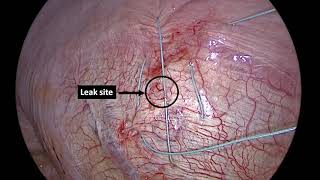
Recurrent pleural effusion secondary to peritoneal dialysis (PD hydrothorax) occurs in about 2% of patients on continuous ambulatory peritoneal dialysis (CAPD). It can potentially be a serious problem, resulting in permanent cessation of CAPD and transition to hemodialysis. This can have many adverse consequences for some patients. Thoracic surgeons are often called upon by nephrologists…
There is currently not enough evidence to decide upon the best practice for thoracic surgery during the pandemic since the situation continues to be highly dynamic on a day-to-day basis. The author presents this short video recorded from a Medtronic thoracic surgery appearing in a webinar during this pandemic to emphasize the points that need…
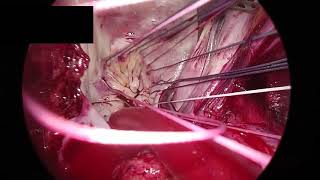
With the constant evolution of minimally invasive technology and skill, cardiac valve procedures are becoming less and less invasive, mostly supported by endoscopic tools and imaging. Entering the chest via the 4th intercostal space provides sufficient space to arrest the heart, enter the left atrium, and repair the mitral valve appropriately, resulting in a fast…
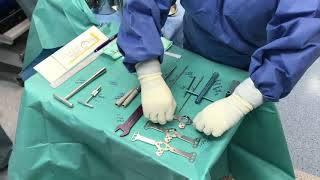
The Pectus UP Implant is a minimally invasive extrathoracic surgical treatment for pectus excavatum. Surgery is customized for each patient according to information obtained from a CT scan. The patient was a 17-year-old boy with a symmetrical pectus excavatum (haller index 2.4). He had no other significant past medical history. Preparation There are 12 implant…
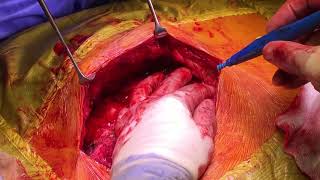
Introduction Since Shoemaker first performed midline sternotomy in an elective cardiac operation in 1953, midline sternotomy has become the most common approach for most cardiac surgical operations, as this is easy to perform, causes less pain, and provides good exposure. However, complications of this approach, such as deep sternal wound infection, fragmented sternum, paramedian sternotomy…
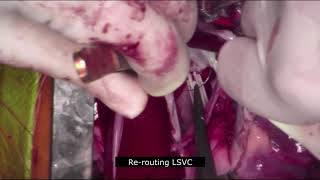
A 3-year-old boy presented with a history of cyanosis and recurrent lower respiratory tract infections since birth. He had a resting saturation between 80-90% and was diagnosed as common atrium with severe mitral valve regurgitation and cleft in the anterior mitral leaflet (AML). During surgery, the presence of a midline inferior vena cava and left…
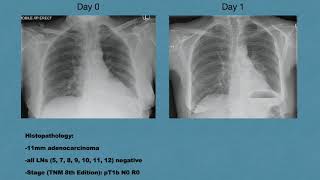
The authors present the case of a 63-year-old patient with an 11 mm nodule in the posterobasal segment (S10) of the left lower lobe. This grew from an initial size of 8 mm over a 12-month period. Image-guided biopsy was rejected, and after a multidisciplinary meeting discussion and with further discussion with the patient, a…
Filmed at the 2020 STS Annual Meeting in New Orleans, Louisiana, Mara Antonoff of University of Texas MD Anderson Cancer Center in Houston moderates a roundtable on the role of metastasectomy in pulmonary metastatic disease. She is joined by Erin M. Corsini of MD Anderson Cancer Center, Loretta Erhunmwunsee of City of Hope Cancer Center…
The Fontan procedure remains the final palliative procedure for all functional single ventricle patients. Since 1968, when it was introduced, the Fontan procedure has undergone many modifications. Extracardiac conduit (ECC) Fontan involves direct connection of the superior vena cava (or cavae) to the pulmonary arteries, mostly as a previous bidirectional Glenn procedure and placement of…