Content from the Journal of the American Neurological Surgeons.
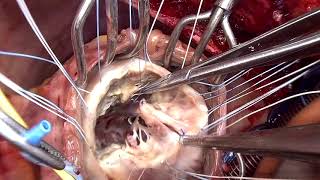
Using their video database between May 2015 and June 2018, the authors analyzed one case of combined THV mitral with tricuspid ViV via transapical and transjugular approach. Pre- and postoperative characteristics were analyzed in a follow-up of 20 months. A 36-year-old male with four previous mitral and tricuspid biological valve replacements presented at the time…
This is a 50-year-old man who presented with exertional dyspnea and fatigue secondary to severe aortic valve stenosis. His past medical/surgical history was significant for previous left lung resection via left thoracotomy followed by a sternotomy for a left pleuropulmonary blastoma that was complicated with a paralyzed left hemidiaphragm. He received adjuvant chemotherapy and mediastinal…
Due to COVID-19, the Birmingham Review Course, traditionally held in-person, was delivered as a two-day interactive virtual meeting. On September 18, 2020, CTSNet was excited to livestream select sessions, covering topics in the cardiothoracic specialty. Speakers for this session included Professor Cameron, Ms D. Harrington, and Mr J. Mascaro. The Birmingham Review Course is the…
CTSNet hosted a global live event addressing the widespread disparities in accessing cardiothoracic surgical care, which the COVID-19 pandemic has brought into even sharper relief. Co-moderators David Cooke, MD, of UC Davis Health and Jacques Kpodonu, MD, of Harvard Medical School were joined by an esteemed panel of international guests, who tackled, among other topics,…
On Thursday, Sept. 17th, CTSNet hosted a live event that included nurse-driven strategies for optimizing cardiac ICU resource utilization and patient safety. Moderator Dr HelenMari Merritt was joined by Minnie Floersch, VAD Clinical Program Coordinator; Mary-Ann Christie, Nurse Practioner CTICU; and Vickie Morton, Director of Clinical and Quality Outcomes and discussed examples of strategies that…
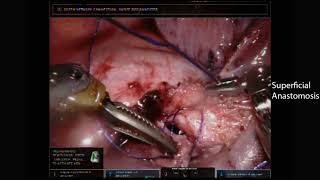
In this video, the authors present a parenchymal sparing robotic sleeve resection of a bronchial carcinoid tumor. Carcinoid tumors are low grade neuroendocrine neoplasms that comprise 0.5-5% of resected lung tumors and 20-30% of all carcinoid tumors. They often involve the main or lobar bronchi and frequently occur in young, otherwise healthy patients. As established…
To highlight transformations in thoracic surgery, a panel of experts discusses innovation in powered staplers and the role that real world evidence plays in informing their decision-making, particularly Ethicon’s real-world evidence. While the panelists reflect on historical models of surgical staplers, they discuss what innovation in thoracic surgery means to them and share their perspectives…
A 30-year-old old woman presented with palpitations and recurrent syncope for the past month. Her 2D echocardiogram showed a large intramyocardial mass arising from the lateral wall of the left ventricular (LV). Chest X ray showed bulge in the left heart border. MRI heart revealed a circumferential mass lesion arising from the posterolateral wall of…
Introduction As transcatheter technology improves, the need for surgical ligation of a patent ductus arteriosus (PDA) decreases. Until recently, no device was approved for infants <5 kg. The Amplatzer Duct Occluder II Additional Size (ADO II AS, Abbott Vascular, Santa Clara, California, USA) was approved by the US Food and Drug Administration for infants >700…
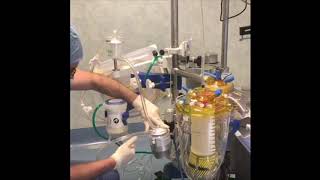
The major advantage of MiECC systems’ intrinsic characteristics is that they abet the best applying cardiovascular physiology to intraoperative perfusion, while they ultimately unify all three operative disciplinary techniques into a common strategy. This joined holistic effect of MiECC may be considered as a therapy in cardiovascular diseases. Many believe that using MiECC systems leads…
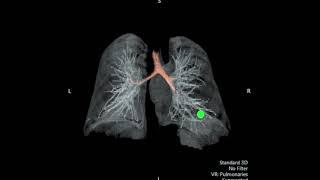
Pulmonary segmentectomy can be an adequate oncological lung resection for early stage lung cancer and deeper metastatic lesions. In select patients, the outcomes are comparable to lobectomy. Historically, this operation has been associated with higher air leak and prolonged length of stay (1). Both video-assisted (VATS) and robotic assisted segmentectomy have similar outcomes (2). The…
A 64-year-old male was referred to the authors’ institution for severe symptomatic TR. The transthoracic echo confirmed severe TR with dilated annulus and the transesophageal echo showed mechanical interference with the posterior TV leaflet mobility and coaptation. Intraoperatively, a fibrotic response causing encapsulation of the lead on the posterior TV leaflet was noted and subsequently…
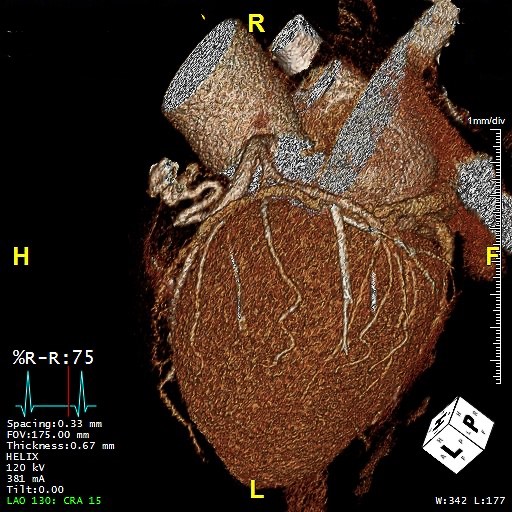
BackgroundCoronary artery fistulae (CAF) are rare anomalies. Among them, the left anterior descending to pulmonary artery is a very unusual occurrence, and those causing severe ischemic symptoms in that location are exceptional. Large fistulas create a significant shunt and a “steal phenomenon,” and can lead to myocardial ischemia and heart failure if left untreated. Case…
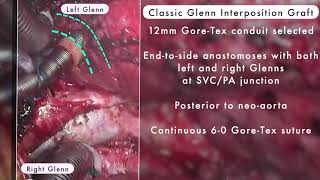
The patient was a 4-year, 3-month-old girl with a hypoplastic left heart syndrome (mitral atresia/aortic atresia), anomalous left coronary artery from the pulmonary artery, partial anomalous pulmonary venous connection (right upper pulmonary vein to right superior vena cava), and left superior vena cava to coronary sinus. On day of life four, the patient went to…
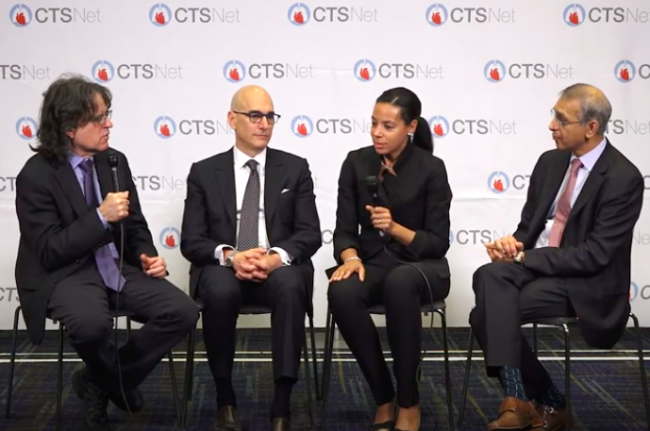
Filmed at the 2020 STS Annual Meeting in New Orleans, Louisiana, Niv Ad of the Washington Adventist Hospital and University of Maryland moderates a discussion on the importance of atrial fibrillation in decision-making in structural heart disease and coronary artery disease. He is joined by Marc Gerdisch of the Franciscan St. Francis Heart Center in…
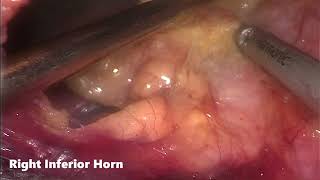
This is a video of a non-intubated subxiphoid multiport VATS thymectomy. The patient was a 40-year-old man who was an asymptomatic chronic smoker. On incidental evaluation, HRCT thorax was suggestive of anterior mediastinal lesions, which on further MRI thorax was confirmed to be cystic and 1.8 x 0.8c m. Awake ventilation anesthesia without muscle relaxant…