Content from the Journal of the American Neurological Surgeons.
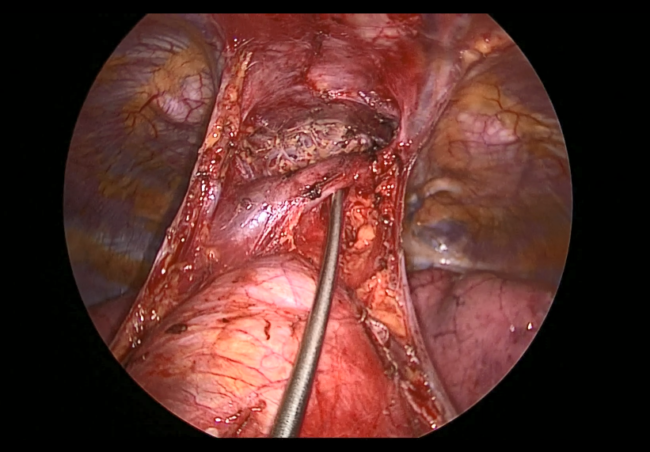
The authors present a thymectomy that was performed for a 49-year-old woman with a history of breast carcinoma who had a positron emission tomography–positive lesion at the level of the anterior mediastinum. Her care was discussed at a multidisciplinary meeting and, although there was a suspicion of a malignant thymoma, the radiologist did not consider…
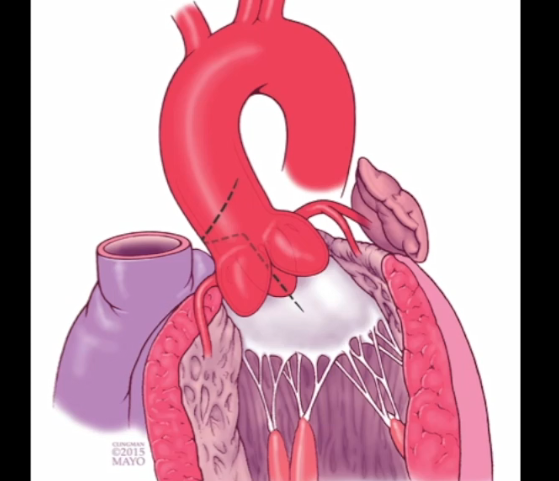
Aortic root enlargement may be necessary for a small aortic annulus to allow the implantation of a larger aortic valve prosthesis. Larger prostheses are associated with a lower incidence of patient prosthesis mismatch and lower rates of structural valve deterioration. Looking to the future, a larger aortic valve prosthesis will facilitate valve-in-valve aortic replacements by…
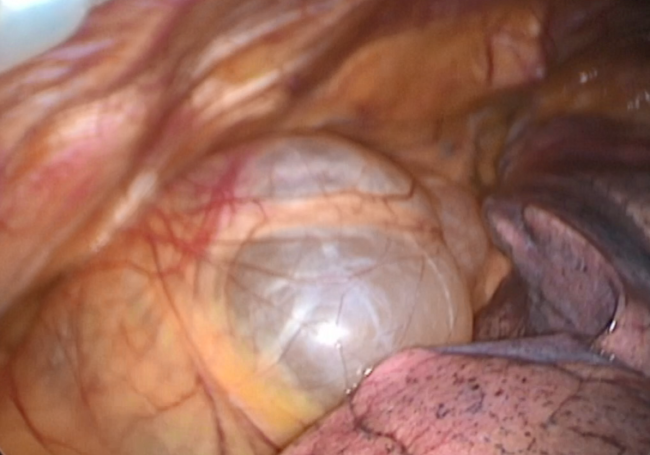
Pericardial cysts are benign and rare congenital malformations with an incidence of 1 in 100,000, representing about 7% of mediastinal masses [1]. Pericardial cysts— as well as pericardial diverticula— are caused by an abnormal fusion of mesenchymal lacunae, although cysts are more common than diverticula, with a relative ratio of 3:1 [2]. Diverticula can be…
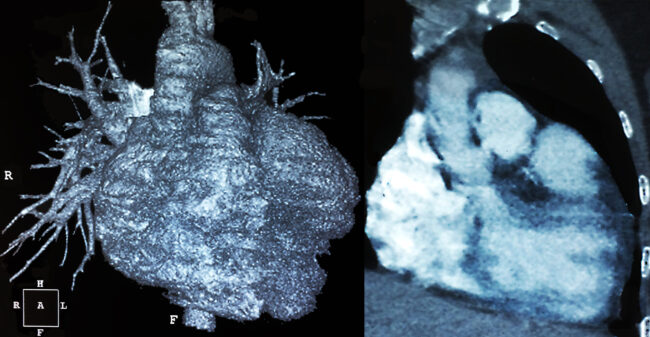
Background Left atrial appendage aneurysm (LAAA) is a rare cardiac anomaly that was first reported in 1960 [1]. Since severe complications of LAAA have appeared, such as symptomatic thromboembolic events, arrhythmias, and congestive heart failure, surgical treatment is generally recommended [2]. The authors describe an asymptomatic 31-year-old woman who was hospitalized because of an LAAA…
On May 3 and 4, 2019, presentations from the Transcatheter Heart Valve Greece 2019 Conference streamed live on CTSNet. Friday sessions included: TAVR Technology in a Rapidly-Evolving Era TAVR on the Uprise: How Do We Deal With Complex Situations? TAVR Dilemmas and Complications Focus on the aortic and mitral valves. Key Lectures: Low-Risk Trial Insights,…
Filmed at the 2019 STS Annual Meeting in San Diego, California, Jacqueline Olive of Baylor College of Medicine in Houston, Texas, USA, moderates a discussion on making the most of networking and career development opportunities at cardiothoracic surgery meetings. Ms Olive is joined by Jessica Luc of the University of British Columbia in Vancouver, Canada,…
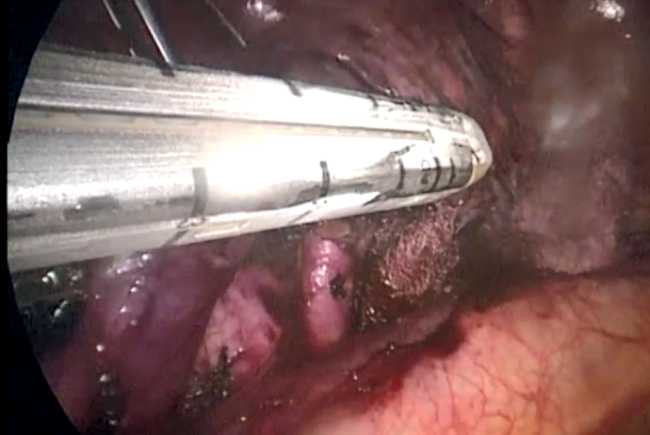
This is a right upper lobe microlobectomy and the author uses the stapler to perform a double stapling twice, hence the “Double Double!” The procedure shown in this video is the microlobectomy technique, which is fully described at www.microlobectomy.com (1). The author did a lymphadenectomy, then dissected out the right upper lobe vein and the…
De Bakey and Cooley, in 1956, first replaced an ascending aneurysm with the aid of cardiopulmonary bypass. Since then, several methods evolved for the surgical repair of the aortic root and ascending aorta aneurysms. Bentall (2), in 1968, first used his technique when he noticed that it would not be possible to join the aortic…
Endoscopic mitral valve repair is one of the most difficult procedures to learn. The learning curve is steep. This steep learning curve has partially to do with the fact that the operation is done with long-shafted instruments, with surgeon looking at the monitor rather than into the wound. Acquiring endoscopic skills with long-shafted instruments is…
This video demonstrates decortication performed for a patient with multiple tension collections. The patient underwent a decortication process for multiple encysted collections that were causing tracheal deviation, airway compression, and severe shortness of breath. Initial radiologist reports showed pictures of multiple bullae, so an urgent lung volume reduction surgery was scheduled. When examining the chest…
CTSNet is excited to announce that “Hybrid Aortic Type I Dissection Repair” by Nestor Manuel Clusa has won first place in the 2018 Resident Video Competition. Dr Clusa is a cardiothoracic surgery fellow at the Cardiovascular Institute of Buenos Aires in Argentina. In this Google Hangouts video, CTSNet Associate Editor Joel Dunning congratulates Dr Clusa on his winning…
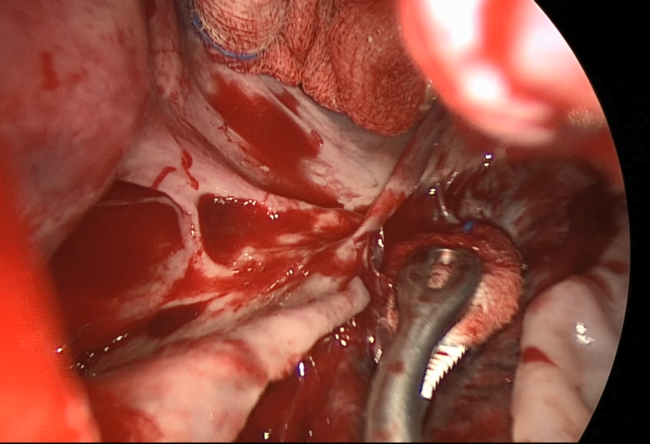
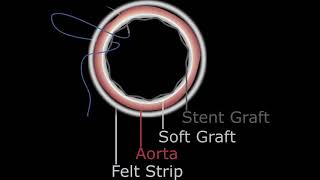
Objectives The frozen elephant trunk can facilitate the repair of arch and proximal descending aortic pathologies. Commercially available hybrid grafts may simplify this approach by allowing for a single suture line with the soft graft secured to the stent, potentially streamlining the distal anastomosis. However, this is a commodity not available at all institutions. The…
This presentation is about a robotic S9-S10 segmentectomy assisted by a multimodal reconstruction imaging system. In the literature, several series report experiences of robot-assisted segmentectomy for benign or malignant pathologies. However, they were either common to the basal segments interesting segments 7 to 10, or the segment of the Fowler (segment 6). In the series…
Patient Details A 52-year-old man with his first presentation in heart failure, NYHA class IV. Transthoracic echocardiogram showed severely dilated left ventricle (LV) with global hypokinesia, left ventricular ejection fraction (LVEF) 20%, moderate mitral regurgitation. Coronary angiogram demonstrated no significant coronary artery disease. Congestion initially improved on intravenous diuretics. Low cardiac output on milrinone infusion,…
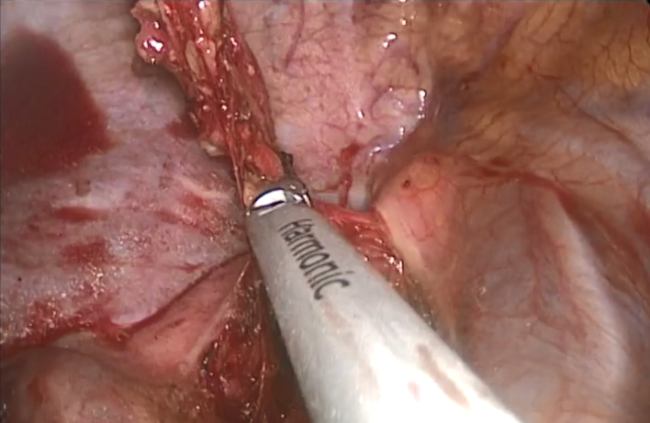
Mr Felice Granato demonstrates a thoracoscopic right upper lobectomy, which was performed for a primary pulmonary malignancy. The Harmonic HD was adopted for sealing of one of the segmental arteries (A2). It was also used to dissect the soft tissues, the pleura, the pulmonary parenchyma, and importantly, to perform an extensive and homeostatic lymphadenectomy. The…