Content from the Journal of the American Neurological Surgeons.
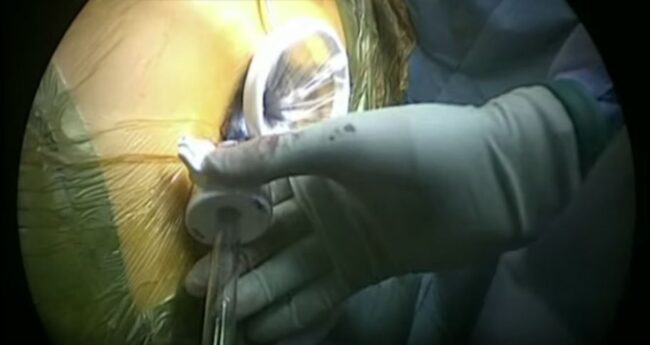
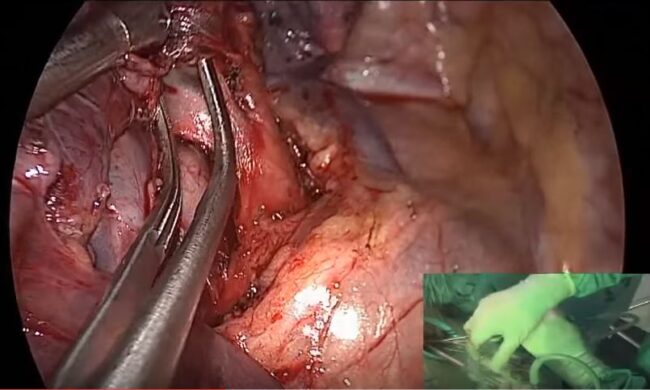
This video shows a uniportal subxiphoid lobectomy in a patient with a proven adenocarcinoma of the middle lobe. The author demonstrates patient positioning, how to make the port, the lobectomy, lymphadenectomy of station 4R and station 7, and how to close the subxiphoid port. Novel pieces of equipment to make the operation easier are also…
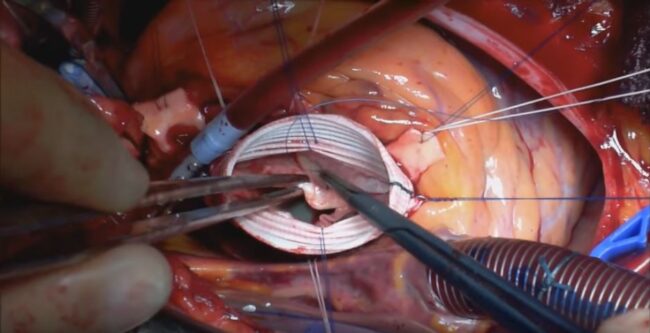
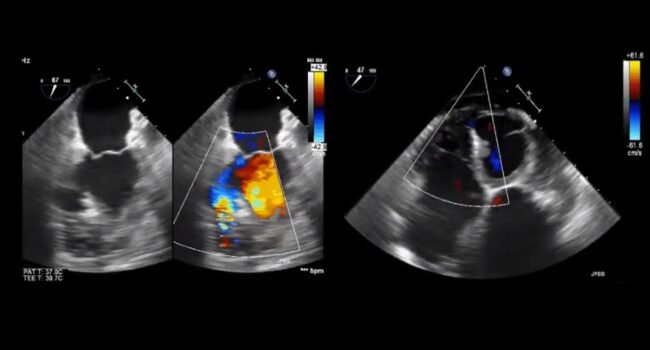
Quadricuspid aortic valve (QAV) is a rare congenital cardiac defect that was first classified by Hurwitz and Roberts following autopsy studies in 1973 (1). Because of its rarity and characteristics, the natural history and long-term outcomes are still poorly defined. Recently, Tsang et al. demonstrated a quadricuspid aortic valve diagnostic frequency of 0.006% (2). In…
In this STS-sponsored webinar, an expert panel of speakers presents on a broad spectrum of issues regarding readmission following cardiac surgery in general, and coronary bypass surgery in particular. Gaetano Paone of Henry Ford Hospital, Detroit, Michigan, moderates, and the panelists include David Shahian of the Massachusetts General Hospital, Boston, Massachusetts; Frank Shannon of William…
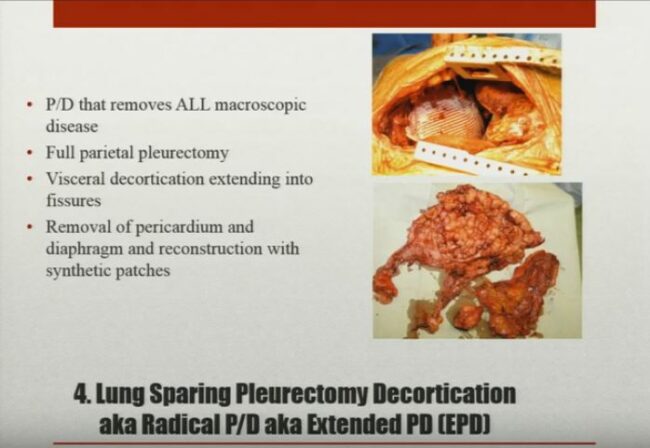
Apostolos Nakas of Glenfield Hospital, Leicester, United Kingdom, provides a detailed overview of the surgical treatment options for malignant pleural mesothelioma. Citing experience from his high-volume clinic and trial data, Dr. Nakas concludes that extended pleurectomy decortication should be used for appropriate patients, as it spares the lung and achieves macroscopic clearance. Dr. Nakas also…
Introduction: Marginal ulcers (MUs) occur in approximately 1% of patients after bariatric surgery, especially Roux-en-Y gastric bypass. Rarely, MUs are refractory to maximal medical management and may require operative intervention. Presentation of Case: The authors present the case of a 32-year-old woman with intractable MUs after Roux-en-Y gastric bypass, which were refractory to maximal medical…
Inferior vena cava (IVC) filters, while efficacious when used appropriately, have come under a great deal of federal scrutiny due to their over utilization and failure to remove them in a timely fashion. Although most can be removed using commercially available devices, there remain some filters which resist removal. This is usually due to the…
Click below to view the full PDF. This protocol is provided by the James Cook University Hospital, Middlesbrough, United Kingdom.
Originally presented as a Surgical Motion Picture at the 2015 STSA Annual Meeting Objectives: Repair of a posterior ventricular septal rupture after an acute myocardial infarction is a great challenge for cardiac surgeons. The authors describe their surgical technique in this regard, giving special attention to technical maneuvers in order to achieve a successful result.…
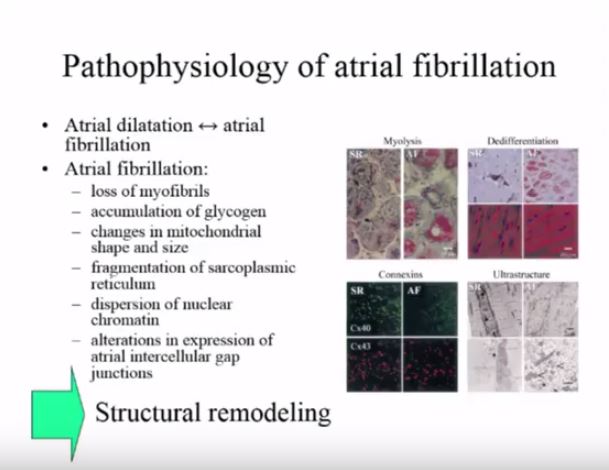
Mark La Meir of Academic Hospital, Maastricht, the Netherlands, explains the rationale for the surgical treatment of atrial fibrillation. He describes the pathophysiology of atrial fibrillation, and examines the evidence for improved outcomes after surgical ablation. This presentation was originally given during the SCTS Ionescu University program at the 2016 Annual Meeting of the Society…
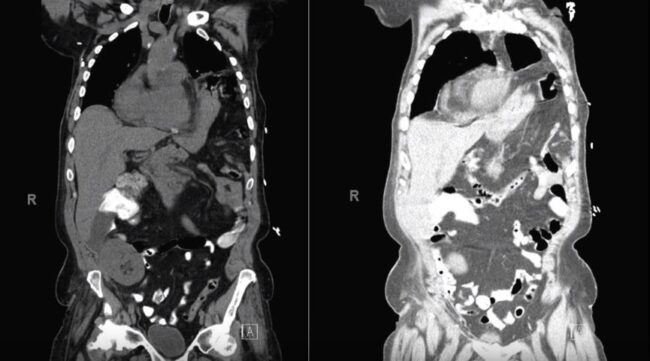
The authors present a video of a 65-year-old female with non-ischemic cardiomyopathy, who had a left ventricular assist device (LVAD) implanted as a bridge for transplantation. After the heart transplant, the patient developed profound shortness of breath and a diaphragmatic hernia was diagnosed. This video demonstrates the authors’ laparoscopic technique for performing a repair.
Complete surgical resection is the optimal treatment for malignant and complex benign left heart tumors. Anatomic inaccessibility and the relationship with vital cardiac structures can make complete resection of these complex tumors via standard surgical techniques suboptimal. An autotransplantation technique in these cases allows optimal anatomic exposure for complete tumor resection and accurate reconstruction.
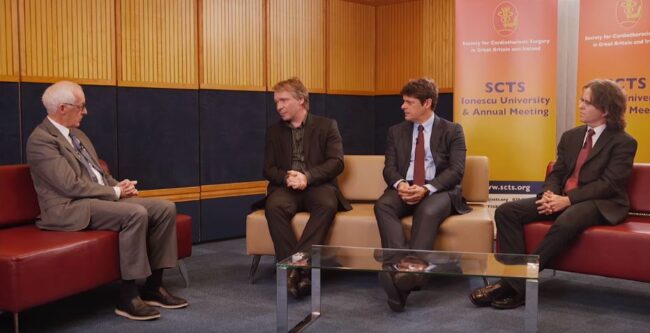
What is the current state of atrial fibrillation surgery? An international panel of experts met at the 80th Annual SCTS Annual Meeting in Birmingham, United Kingdom, for an in-depth discussion of this issue. Moderator Michael Mack of the Heart Hospital Baylor, Plano, Texas, was joined by Niv Ad of Fairfax Hospital, Falls Church, Virginia, Manuel…
Maninder Singh Kalkat of Heartlands Hospital, Birmingham, United Kingdom, discusses palliative treatments for non-resectable tracheal tumors. The aims of palliation in these cases are to improve the patient’s ability to breath and prepare them for further non-surgical treatment. Mr. Kalkat describes and evaluates the current palliative options, including rigid bronchoscopy, dilation, laser treatment, and stents.…
Case Summary A 57-year-old asthmatic, non-smoker presented with a cough. This female patient had previously undergone a surgical excision of a chondrosarcoma from her right femur (during 2010). A CT scan showed a 1.4 cm lesion in the apical segment of the right upper lobe, close to the border of the anterior segment (S3). CT-guided…
Tricuspid valve replacement in children is associated with non-negligible complication rate. Both mechanical and bioprosthetic valves have significant disadvantages in the tricuspid position in children, and tricuspid valve repair is preferred whenever possible. Tricuspid valve replacement with a cryopreserved mitral homograft has been described in limited case series, with excellent mid-term results in patients with…
Click below to view the full PDF. This protocol is provided by the James Cook University Hospital, Middlesbrough, United Kingdom.