Content from the Journal of the American Neurological Surgeons.
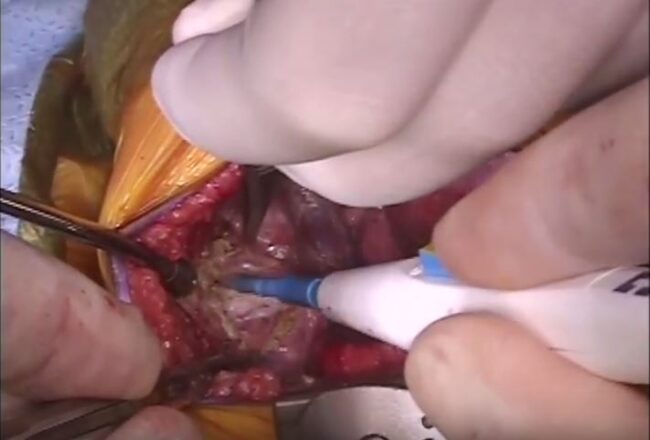
This video demonstrates a slide tracheoplasty for long segment tracheal stenosis. The patient was a five-month-old male, who had persistent biphasic stridor following an upper respiratory infection.
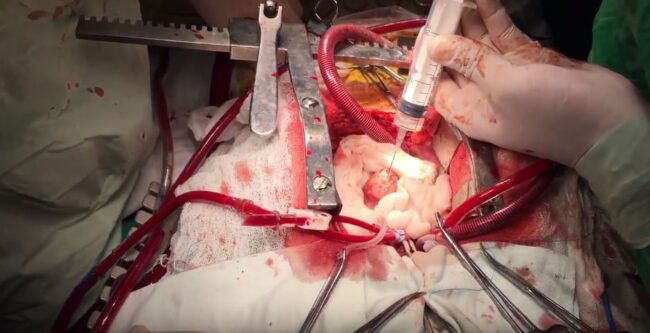
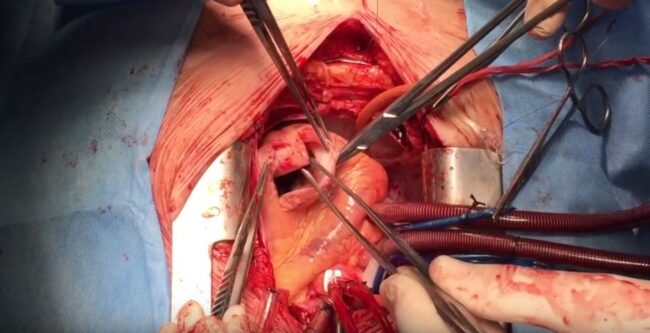
Cardiac hydatid cyst is an uncommon but potentially fatal disease. Humans are accidental hosts of cystic echinococcosis, and the liver and lungs are the most frequently involved organs. This video shows a unique case of an intramyocardial hydatid cyst of the left ventricle and a pulmonary hydatid cyst in a 38-year-old female patient. Surgical removal…
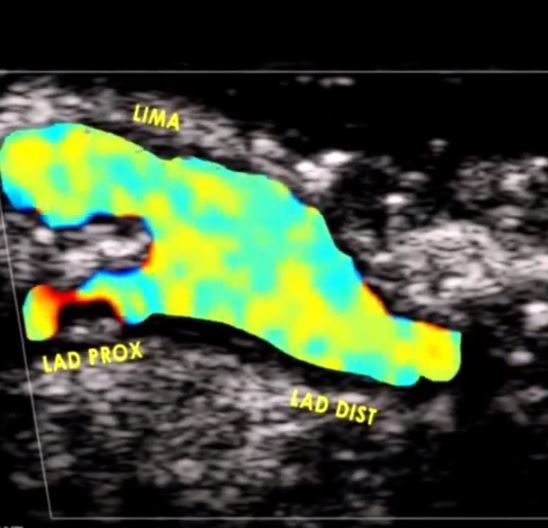
Gabriele Di Giammarco of University G D’Annunzio, Chieti-Pescara, Italy, discusses the importance of intraoperative graft verification in CABG procedures to improve patency outcomes. This presentation was originally given during the SCTS Ionescu University program at the 2015 Annual Meeting of the Society for Cardiothoracic Surgery in Great Britain and Ireland. This content is published with…
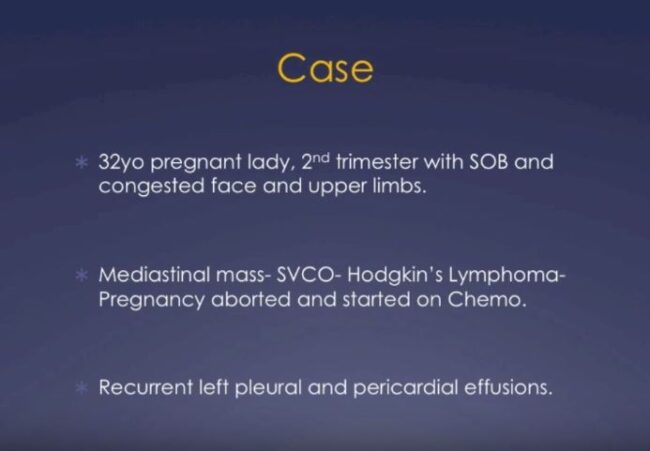
This is the case of a young woman with Hodgkin’s lymphoma who developed left pleural and pericardial effusions after chemotherapy. The drained fluid was milky-white in appearance and tested negative for chylomicrons. The cytology was predominantly lymphocytic. This video shows a left VATS procedure for pseudo-chylopericardium and the insertion of an indwelling left pleural catheter…
The treatment of left ventricular aneurysm has been a matter of study for many years, and several techniques have been described. The endoventricular circular patch plasty repair was reported in 1984 by Vincent Dor (1, 2, and 3). The aim of this method is to rebuild the left ventricular geometry after myocardial infarction (akinetic/dyskinetic zone…
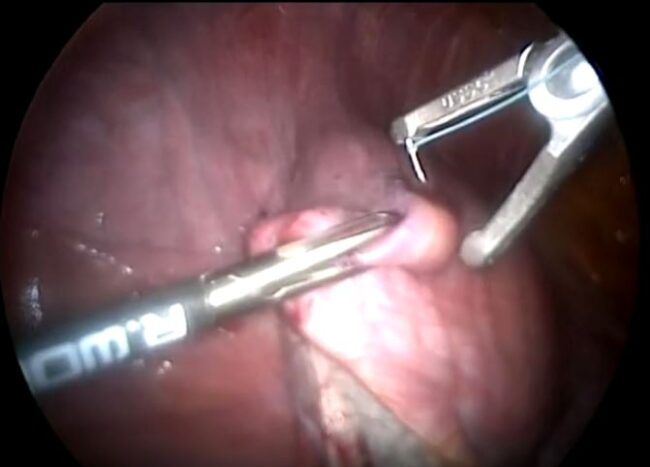
In the performance of a three-port VATS plication, the authors demonstrate the use of novel tools to perform horizontal mattress sutures running in an oblique fashion. At the end of the procedure, an Ethilon is passed around the 9th rib and linked to an overrunning suture to prevent late recurrence.
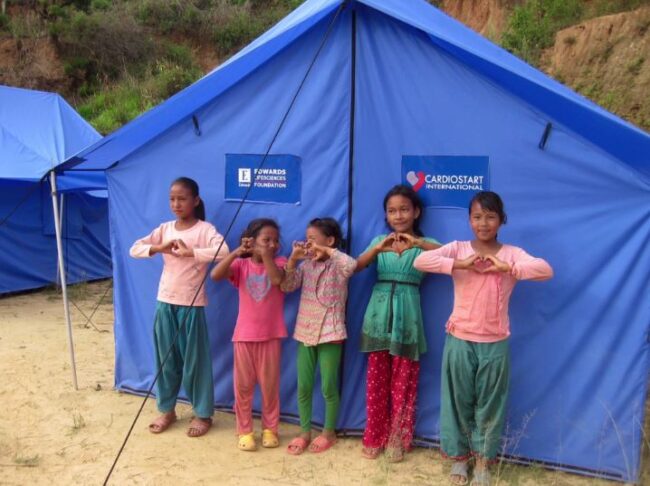
CardioStart International is a charitable organization that provides free cardiovascular care and develops heart surgery programs around the world. On May 2, 2015, a team was scheduled to help initiate a cardiac program at Kathmandu University in Nepal, but less than one week before the team was due to arrive, the country was devastated by…
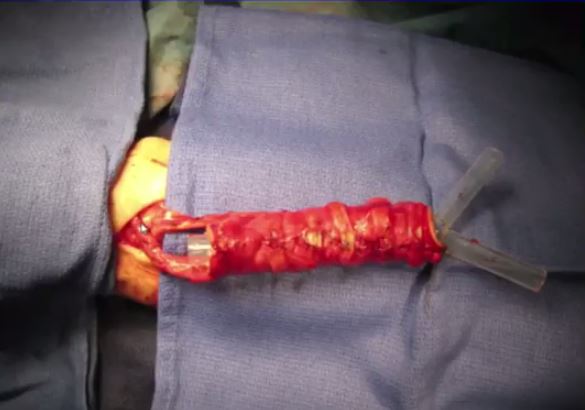
Philippe Dartevelle of Marie-Lannelongue Hospital and Paris-Sud University, Paris, France discusses the complex topic of tracheal substitution. Professor Dartevelle also provides a detailed description of how to use a forearm free flap for tracheal replacement. This presentation was originally given during the SCTS Ionescu University program at the 2016 Annual Meeting of the Society for…
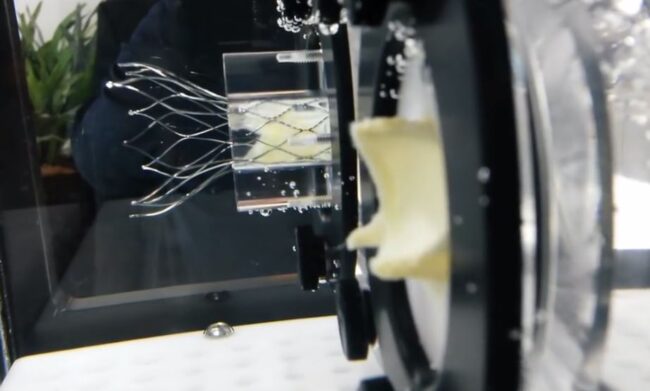
Introduction In this video, the authors demonstrate how to replace the pulmonary valve in adult patients with severe pulmonary valve regurgitation (PVR). Most of these adult congenital heart disease patients underwent Tetralogy of Fallot repair in childhood. The transannular patch technique was used to relieve the obstruction at the level of the annulus, which lead…
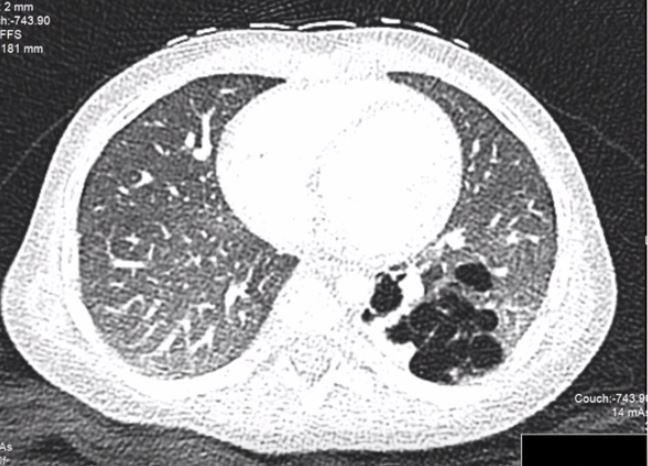
A 14-month-old female patient (full term, normal vaginal delivery) was diagnosed antenatally with left side congenital pulmonary airway malformation. The postnatal workup, including chest CTA, showed left lower lobe (LLL) congenital pulmonary airway malformation and arterial supply of the LLL from a large artery arising directly from the descending aorta. A uniportal thoracoscopic lobectomy of…
The Congenital Heart Surgeons’ Society (CHSS) Data Center has been the academic research engine for the CHSS for over 30 years. It provides high-quality, evidence-based analyses of the surgical management and longitudinal outcomes of patients with important forms congenital heart disease. The Data Center originated as an effort to overcome the challenges related to the…
“I’ve found a way to craft my career so that I can spend as much time as possible doing humanitarian mission work. It’s been an important focus for me. I feel like it is the way my professional and personal fulfillment can overlap,” Emily Farkas says in an interview with Joel Dunning, which was filmed…
Gianni Angelini of Imperial College, London, UK, considers the evidence for single versus multiple arterial grafts in coronary bypass surgery. Professor Angelini discusses why saphenous vein remains the second conduit of choice in the majority of cases worldwide. This presentation was originally given during the SCTS Ionescu University program at the 2015 Annual Meeting of…
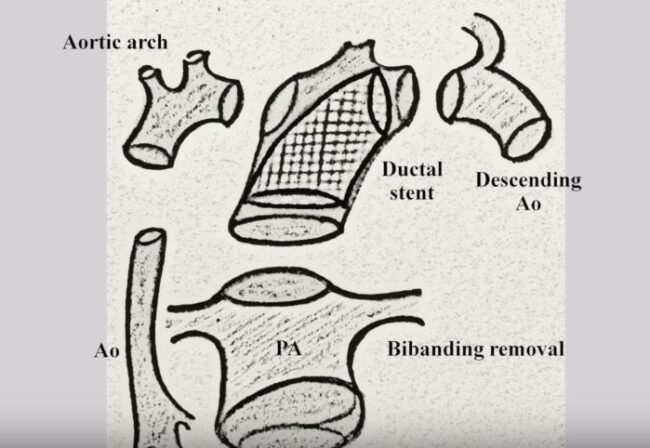
Technique A 3.2 kg male neonate was delivered with the diagnosis of aortic atresia, ventricular septal defect, balanced ventricles, hypoplastic ascending aorta (1.5 mm), and severe hypoplastic aortic arch. On day two he underwent bilateral pulmonary banding. Twelve hours later he collapsed and was resuscitated with ECMO (neck vessels cannulation). The ductus was stented prior…
In this video, the authors present a robot-assisted lingula-sparing left upper lobectomy, using segmental plane identification with near-infrared fluorescence imaging. During this procedure, the arterial and venous vasculature, along with the bronchial segments to the apico-posterior and anterior segments of the left upper lobe, are identified and divided. Once the upper divisions have been devascularized,…
Niv Ad of the Inova Heart and Vascular Institute, Falls Church, Virginia, discusses his approach to the cryosurgical Cox Maze procedure. Dr. Ad shares the procedural steps and clinical data. This presentation was originally given during the SCTS Ionescu University program at the 2016 Annual Meeting of the Society for Cardiothoracic Surgery in Great Britain…