Content from the Journal of the American Neurological Surgeons.
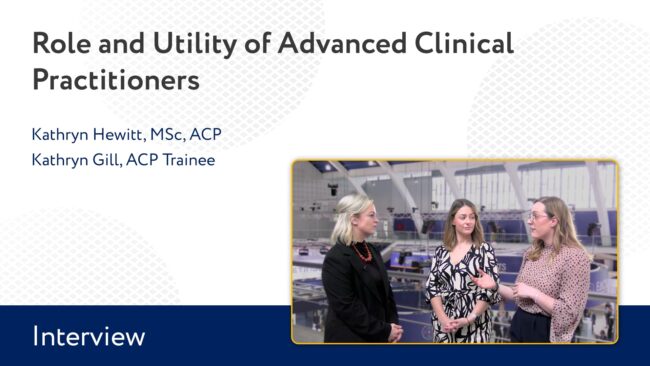
At the 2024 EACTS Annual Meeting, CTSNet senior editors set out to interview the most knowledgeable CT surgeons from around the world. Stay tuned for more interviews from the meeting. At the 2024 EACTS Annual Meeting, Dr. Alice Copperwheat spoke with Kathryn Hewitt and Kathryn Gill about the role and utility of advanced clinical practitioners. They explored…
Aorto-atrial fistulas are rare anatomical anomalies that can arise from various etiologies, with endocardial infections being the most common cause in adults. Their true impact on the population is unknown. Mostly, they correspond to a fistula that communicates the aorta with the right atrium, and secondarily with the left atrium, with an incidence of 2…
A port catheter is a crucial instrument, particularly for chemotherapy patients. It is preferred due to its relatively simple placement, ease of maintenance, significant benefits for the patient, and prolonged usability with proper care. Under normal circumstances, venipuncture is ideally performed using imaging techniques, and catheter placement is confirmed via fluoroscopy. However, economic constraints may limit…
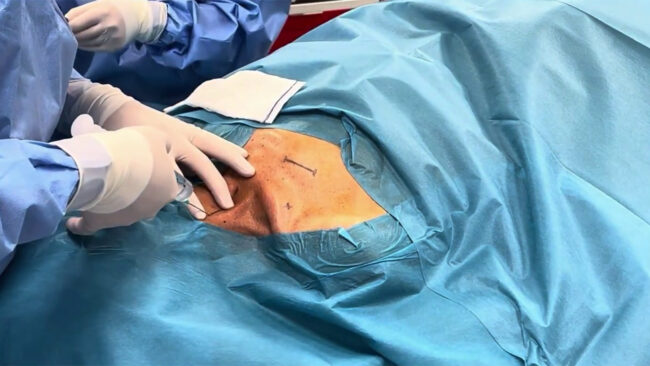
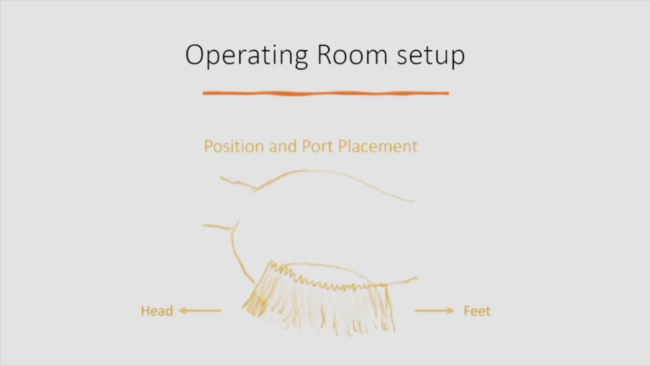
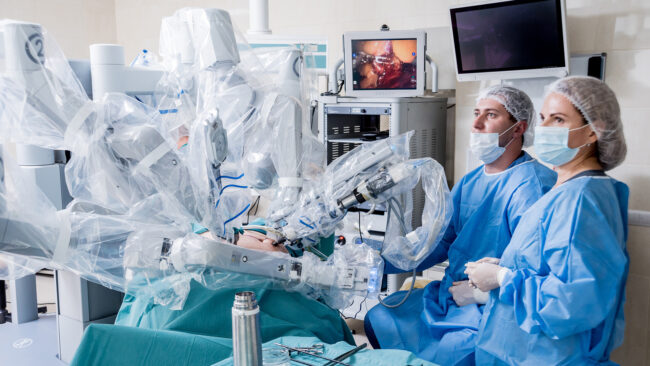
In this new CTSNet President’s Series, Dr. Husam Balkhy, president of ISMICS, showcases cutting-edge, totally endoscopic cardiac procedures from the University of Chicago. Watch for more videos in this series coming soon. Both patients were taken to the operating room (OR) and positioned supine with a roll under the right side. General endotracheal anesthesia was initiated using…
This is the winning video from the 2024 CTSNet Resident Video Competition. Watch all entries into the competition, including the second and third place winners. Click here to watch Dr. Allen A. Razavi’s interview with CTSNet Editor-in-Chief Joel Dunning. The patient was a 77-year-old male with a history of asthma, type 2 diabetes, and end-stage interstitial…
In this video, Dr. Vince Gaudiani demonstrates his method for repairing bileaflet mitral valve prolapse through a rooftop incision in the left atrium using an upper ministernotomy. The repair is performed on a Barlow’s valve with prolapse of both the anterior and posterior mitral leaflets. There were no torn chords to the anterior leaflet, so chords…
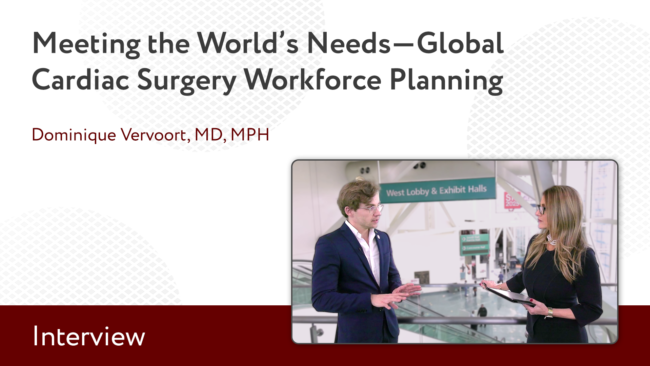
At the 61st STS Annual Meeting, CTSNet senior editors set out to interview the most knowledgeable CT surgeons from around the world. Watch for more interviews from the meeting in the coming weeks. At the 2025 STS Annual Meeting, CTSNet Senior Editor Dr. Emily Farkas spoke with Dr. Dominique Vervoort about global cardiac surgery workforce planning.…
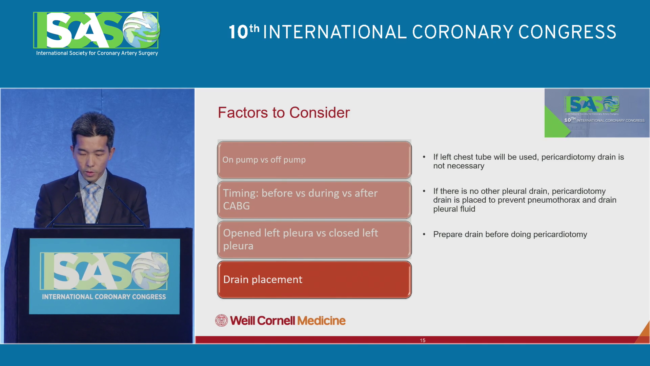
At the 10th Annual International Coronary Congress, renowned surgical experts gathered to discuss the latest developments and techniques in coronary surgery. Watch for more ICC 2024 videos in the coming weeks. At the 10th Annual International Coronary Congress, Dr. Christopher Lau delivered a presentation on “How to Do a Quick, Safe Posterior Pericardiotomy in Every Case.”…
Patient Selection The main indication for thoracic truncal vagotomy is recalcitrant marginal ulcer following previous gastric surgery (1,2). This procedure helps reduce gastric acid production, promoting ulcer healing and preventing further complications. Patients who experience persistent or recurrent ulcers despite prior interventions such as proton pump inhibitors or surgical procedures may benefit from this approach.…
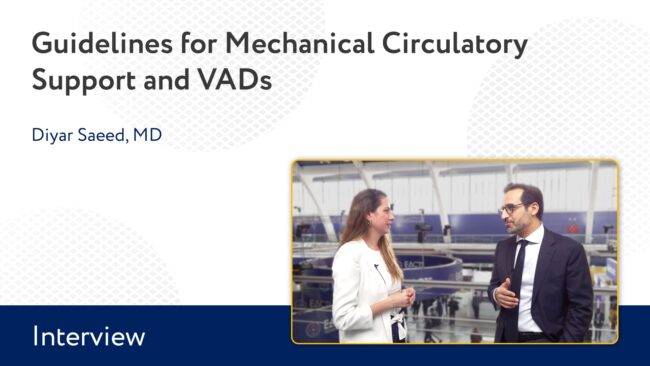
At the 2024 EACTS Annual Meeting, CTSNet senior editors set out to interview the most knowledgeable CT surgeons from around the world. Stay tuned for more interviews from the meeting. At the 2024 EACTS Annual Meeting, CTSNet Senior Editor Dr. Lorena Montes spoke with Dr. Diyar Saeed about the guidelines for mechanical circulatory support and ventricular assist…
Aortic arch disease can be addressed in different ways, including debranching followed by endograft coverage. A 72-year-old male patient presented with a 5.7 cm aortic aneurysm abutting the origin of the left subclavian artery. He underwent proximal aortic arch debranching, which included the innominate and left common carotid arteries, followed by coil embolization of the…
Background Arterial cannulation strategy in type I aortic dissection remains challenging, especially for hemodynamically unstable patients or those with dissection extending into the innominate artery. This video provides an overview of the steps involved in the direct true lumen (DTL) cannulation technique. Methods After a median sternotomy and full heparinization, a two-stage venous return cannula…
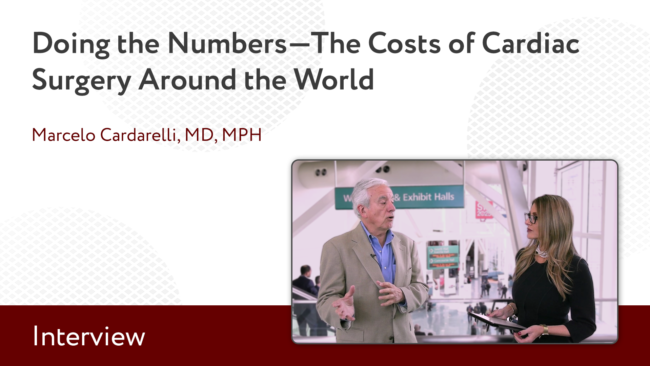
At the 61st STS Annual Meeting, CTSNet senior editors set out to interview the most knowledgeable CT surgeons from around the world. Watch for more interviews from the meeting in the coming weeks. At the 2025 STS Annual Meeting, CTSNet Senior Editor Dr. Emily Farkas spoke with Dr. Marcelo Cardarelli about the costs of cardiac surgery…
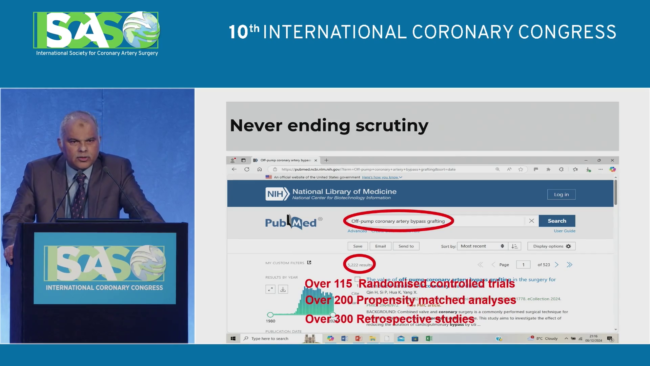
At the 10th Annual International Coronary Congress, renowned surgical experts gathered to discuss the latest developments and techniques in coronary surgery. Watch for more ICC 2024 videos in the coming weeks. At the 10th Annual International Coronary Congress, Dr. Shahzad G. Raja delivered a presentation on “10-Year Mortality of OPCAB vs ONCAB.” He examined the coronary…
Transaortic edge-to-edge Alfieri mitral repair is an excellent yet simple tool for certain clinical circumstances. These include complex surgeries on patients with weak ventricles, where an expedited clamp time is crucial. This is particularly relevant when the aorta is being opened for the index operation and when the mechanism of mitral insufficiency is expected to…
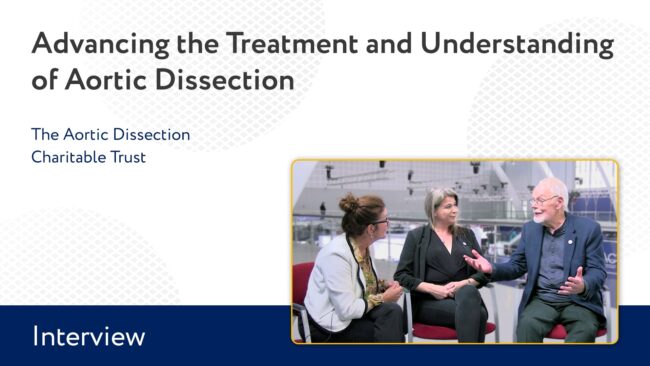
At the 2024 EACTS Annual Meeting, CTSNet senior editors set out to interview the most knowledgeable CT surgeons from around the world. Stay tuned for more interviews from the meeting. At the 38th EACTS Annual Meeting, CTSNet Senior Editor Jill Ley spoke with Dr. Catherine Fowler, Dr. Graham Cooper, and Bob Harris, from The Aortic Dissection Charitable…