Content from the Journal of the American Neurological Surgeons.
Postoperative stroke after cardiac surgery is a rare but catastrophic complication. Most commonly, it results from embolic dislodgement of atherosclerotic debris that may occur during surgical manipulation of the ascending aorta. Thus, as a strong risk factor for postoperative stroke (1), heavy calcifications of the ascending aorta often contraindicate surgery and shift therapy to less…
This is a video of an inspirational lecture given by Prof. CN Lee to the National University Surgical Cluster in Singapore. Now retired but still available for support and advice, Dr Lee was a past president of the ASCVTS, and he helped set up 30 CT surgery programs in Asia. He continues to be a…
Rapid adoption of minimally invasive surgery into clinical practice has conveyed improvements in outcomes across many surgical specialties. Robotic surgery offers additional advantages due to imbedded safety technologies, improved dexterity, and digital enhancement. However, wide adoption of the robotic technology is still lacking due to complexity of the field. A 62-year-old man presented with complaints…
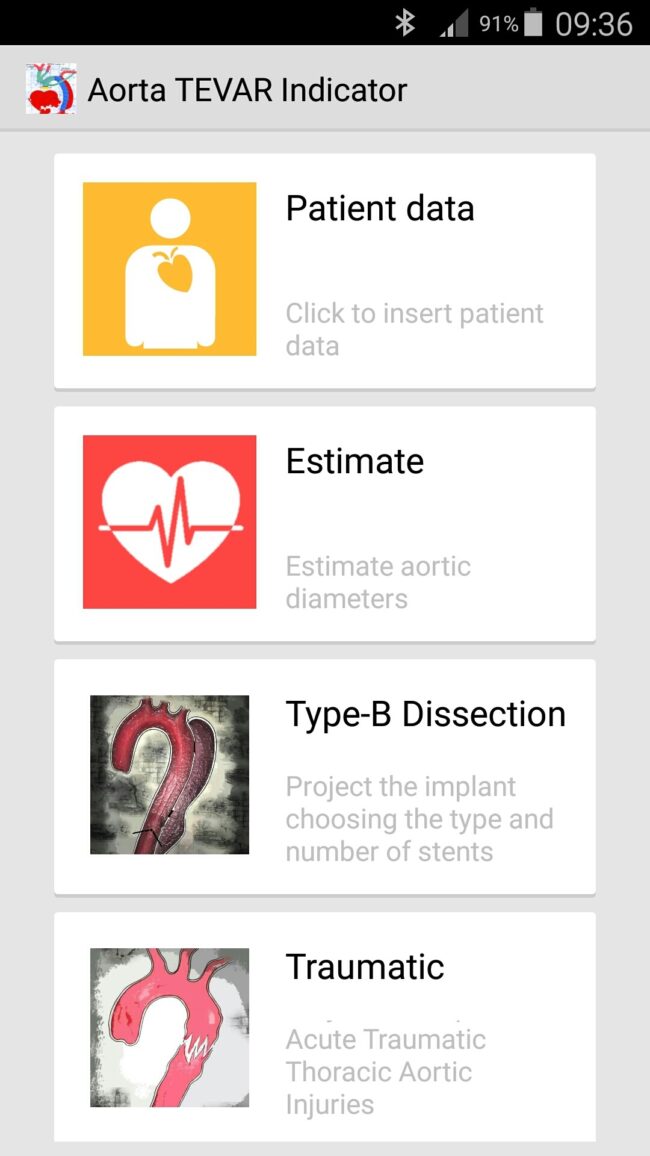
Introduction The technological revolution in the field of medical education is here and it is time to embrace it. The adoption of the on-the-go learning style, the portability of smartphones, and the expression of concepts with interactive illustrations and their global reach have made application-based learning (apps) an effective means. Aorta Tevar Indicator is an…
The Case The authors present the case of a 47-year-old man who presented to the emergency department with a one-week history of chest pain. At presentation, he was hypotensive and required mechanical ventilation and an emergent trip to the catheterization lab, where he was found to have an occlusion of the right coronary artery. A…
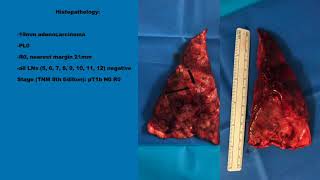
The da Vinci Xi robot can be used in performing anatomical lung resections. The highly magnified 3D HD vision with the integrated fluorescence capability, together with the superior articulation of the instruments, makes the Xi robot a superior tool in performing minimally invasive segmentectomies. Intravenous or bronchial ICG (Indocyanine green, a fluorescent dye) assists in…
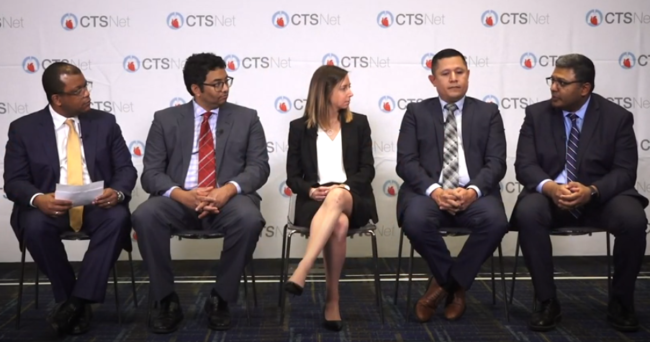
Filmed at the 2020 STS Annual Meeting in New Orleans, Louisiana, David Tom Cooke of the University of California Davis Medical Center moderates a discussion on innovative curriculum design in cardiothoracic surgery. He is joined by Rishindra M. Reddy of the University of Michigan, Amy G. Fiedler of the University of Wisconsin, Luis Armando Godoy…
The first aortic arch surgery was performed in 1957 as a resection of fusiform aneurysm of aortic arch with replacement by homograft (1). However, during the last 63 years, there were significant developments in terms of operative techniques, prosthesis materials, and imaging techniques with digital technology. Subsequently, the endovascular stent-grafts across the primary entry tear,…
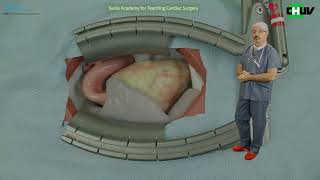
This tutorial video is dedicated to MD students and junior residents in cardiac surgery. It describes the most common surgical techniques to repair a leaking mitral valve. The aim is to demystify the surgical procedure, clearly explaining the different mechanisms of mitral regurgitation and the rationale behind a successful mitral repair. The authors used a…
The authors describe the case of a 64-year-old man presented with disfagia, weight loss, and halitosis over the last three years. The procedure is described step by step, and the postoperative outcome is showed. The patient is symptom-free two years after the surgery. The aim of this video is to describe the anatomy and the…
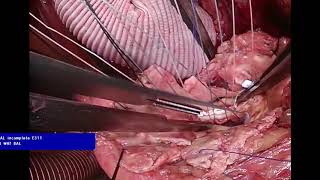
E-vita Open was the first commercially available hybrid graft for frozen elephant trunk (FET) surgery (1). Fifteen years after the first implantation in Essen, a new generation of grafts were developed to address the requirements of treatment according to the different aortic arch and descending aorta pathologies and anatomical morphologies. The E-vita Open NEO (Jotec/Cryolife)…
Aortic root and arch replacement after a previous operation on the aortic valve (AV), root, or ascending aorta remains a major challenge. Indications for reoperation include true and false aneurysms, dissection or re-dissection, structural valve dysfunction, and prosthetic valve-graft infection (1). The authors present the case of a patient with aneurysmal root dilatation and persistent…
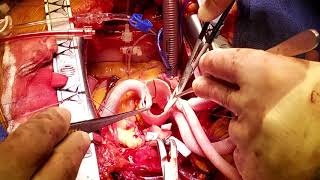
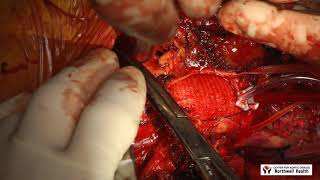
The authors present the surgical management of an emergent, ruptured, chronically dissected aortic arch aneurysm. The surgical reconstruction was facilitated by the use of left axillary artery cannulation, the utilization of total arch replacement, and a “sandwich” frozen elephant trunk technique utilizing two thoracic aortic stent grafts to obtain hemostasis. Disclaimer The information and…
This is the case of a 65-year-old woman who presented with exertional dyspnea, fatigue, and a long history of chronic hemolytic anemia. She had a complex cardiac surgical history with four previous sternotomies to address mitral valve (MV) pathology. The patient had three previous MV replacements with mechanical prostheses (St. Jude twice and Starr Edwards…
Mara Antonoff, Melanie Edwards, Brian Mitzman, and Erin Gillaspie delve into why wellness matters during crises, strategies to achieve wellness, and obstacles to overcome so members of the healthcare team can support one another during challenging times.
Mara Antonoff, Brian Mitzman, Michael Maddaus, and Mehran Amirizadeh discussed crisis management and resilience, including leadership, maintaining personal well-being, and coming back stronger in the face of the pandemic.