Content from the Journal of the American Neurological Surgeons.
A sixty-five-year-old woman developed double vision and the investigation she underwent revealed an 11 cm thymoma. Subsequently, she had a median sternotomy and thymectomy, but the left phrenic nerve was injured, which resulted in left diaphragmatic paresis. The surgery was followed by radiation of the anatomic area of the thymus, as histology showed a type…
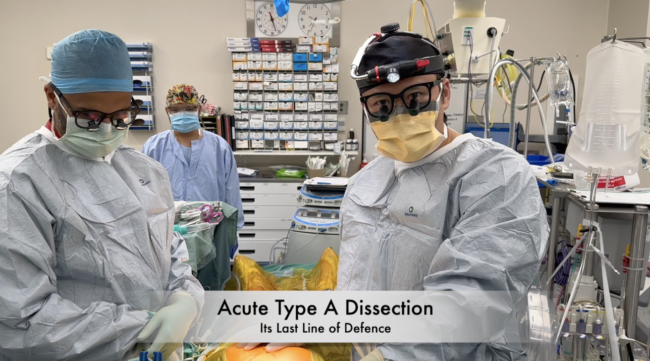
An eighty-four-year-old woman presented with acute type A aortic dissection and blood in the pericardial sac. The dissection was contained by the visceral pericardial layer (i.e. the last line of defense). The patient underwent a successful emergency aortic repair at the Royal Prince Alfred Hospital, Sydney, Australia. First, a midline incision was performed from the…
This video demonstrates how the surgical team managed to save an elderly woman who presented initially with tamponade and contained aortic rupture, but subsequently developed frank aortic rupture. The patient underwent aortic root and hemi-arch replacement under this critical circumstance. The patient had a full recovery without any neurological complications. First, a sternotomy was performed…
Many studies demonstrate the superiority of the bilateral internal thoracic artery (BITA) versus single internal thoracic artery (SITA) grafting technique when it comes to early and late survival and decreased need for repeat revascularization (1). Despite this, adherence to BITA grafting remains low in most centers. This is thought to be attributed to a longer…
Dr. Vince Gaudiani introduces his series on different techniques for aortic root reconstruction. The patient is a sixty-year-old man who presented with collapse and was found to have a 7 cm dilated aortic aneurysm with severe aortic regurgitation. Femoral vein cannulation was performed, followed by aortic cannulation and retrograde cardioplegia. The author describes his logic…
This video shows surgical repair of pentalogy of Fallot in a thirteen-year-old boy. A team of British surgeons assisted the team at the National Cardiothoracic Centre in Accra, Ghana with this operation. The patient had a delayed diagnosis for this condition. In addition, it was thought to be a tetralogy of Fallot until intraoperative TOE…
The patient is a thirty-year-old woman who underwent an aortic valve replacement in 2021, aortic prosthesis and mitral valve replacement in 2022 for endocarditis, and a redo operation for dysfunction/dehiscence of the mitral valve in February 2023. She was affected by systemic lupus erythematosus and suffered from chronic renal insufficiency requiring dialysis waiting renal transplantation. …
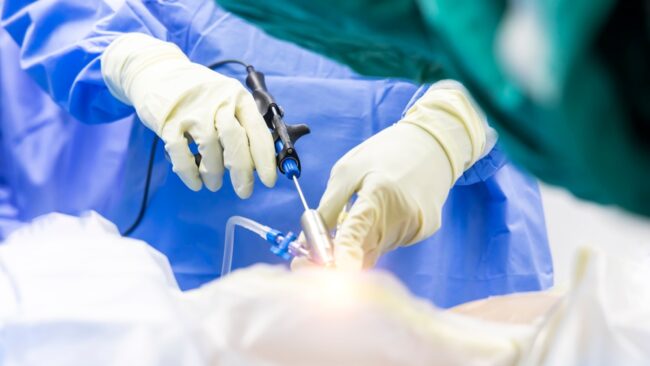
Endobronchial carcinoid tumors require bronchoplasty, which can control the resection margins and subsequent postobstruction secretions and potential infection focus. For the classical open thoracotomy cases, bronchoplasty is performed with classical direct straightforward surgical knotting of interrupted sutures. However, in the era of minimally invasive surgery, this technique can be time consuming, which makes intra or…
At the 2024 STS Annual Meeting, CTSNet Editor in Chief Joel Dunning and CTSNet senior editors set out to interview the most knowledgeable CT surgeons from around the world. CTSNet Editor in Chief Joel Dunning spoke with Professor Justin Blasberg about a recentstudy on longitudinal follow-up with esophageal cancer patients. The study linked STS database…
The visceral pericardium covers the heart and the great vessels. It is mentioned in embryology textbooks, but it is rarely described in surgical textbooks. It is a distinct layer that provides additional strength to the ascending aorta, especially in acute aortic dissection and impending rupture. In this video, I will dissect out the visceral pericardium…
The visceral pericardium is a defined layer of connective tissue that covers the heart and the great vessels. It provides additional strength to the ascending aorta and can be regarded as the last line of defense in acute type A aortic dissection and impending rupture. It may well be the only layer of tissue holding…
The search for an ideal cardiac valve substitute continues. Homografts have the advantages of resistance to infection, superior hemodynamic profile, and avoidance of anticoagulation compared to the conventional prosthetic valves (1). However, their durability and availability are a concern. At this center, the donor selection, procurement, sterilization, and preservation process is based on the recommendations…
In this short video, Dr. Andrew Owens talks through and gives a few good tips for a safe redo sternotomy. First, external defibrillator pads were placed and the patient was prepped. A discussion was had with the team as to the plan for a large bleed or ventricular injury. The sternal wires were then cut…
At the 2024 ESTS Conference in Barcelona, Spain, Editor in Chief Joel Dunning interviewed some of the most knowledgeable thoracic surgeons from around the world to highlight the fascinating work they are doing. Stay tuned for more interviews from the meeting. CTSNet Editor in Chief Joel Dunning spoke with Diego Gonzalez Rivas about his upcoming…
This video presents a case of minimally invasive mitral valve replacement, left atrial appendage closure and left atrium plication. The patient is a sixty-eight-year-old woman with a history of rheumatic heart disease. She had symptoms of dyspnea and permanent atrial fibrillation. On the echocardiograph, surgeons observed severe mitral valve stenosis. Her ejection fraction was 45…
The patient is a twenty-year-old female who was born with congenital bilateral branch pulmonary arteries hypoplasia and severe stenosis. She developed suprasystemic right ventricular pressure and underwent transcatheter balloon dilation and multiple stent placement that failed to demonstrate any growth in her branch pulmonary arteries or improvement in her right ventricular pressure. Echocardiography did not…