Content from the Journal of the American Neurological Surgeons.
Find it here: the Second International Webinar on Minimal Invasive Extracorporeal Technologies, which took place in Thessaloniki, Greece, on November 29-30, 2019. Friday, November 29, 201916:00 – 20:00 Eastern European Standard Time (8:00 am – 12:00 pm CST) Tune in for select sessions, including: Introduction to the Meeting Μinimal Invasive Extracorporeal Circulation: State-of-the-Art Research and Development…
The authors present the case of a 79-year-old man with a distant history of smoking who presented with a slowly enlarging 1 cm nodule. This was initially found on surveillance for a thoracic aortic aneurysm two years prior to resection and the authors were following it with repeat scans. On positron emission tomography (PET) scan,…
Ascending aortic graft kinking occurs incidentally after replacement of the ascending aorta. If not corrected, graft kinking may cause heart failure (1), severe hemolytic anemia with renal dysfunction (2), or graft thrombosis and thromboembolism (3). All these complications require redo surgery to replace the kinked graft. The reason for aortic graft kinking is excessive graft…
IntroductionIn pediatric patients with severe congenital heart disease and end-stage heart failure, cardiac transplant may be the only option. Especially in patients with a medical history of multiple open-heart surgeries, it is a technically demanding procedure and requires a well-trained team with experience in congenital heart disease. The first attempt of pediatric heart transplantation was…
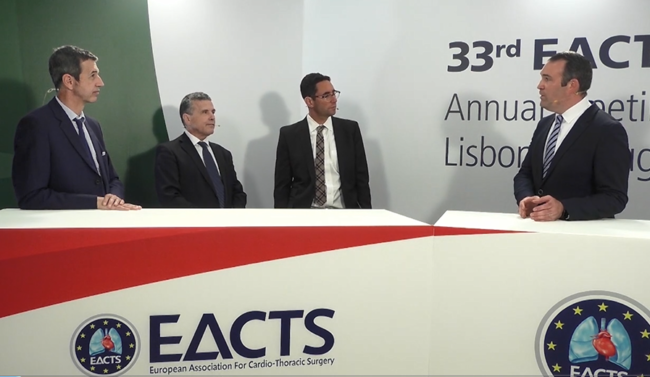
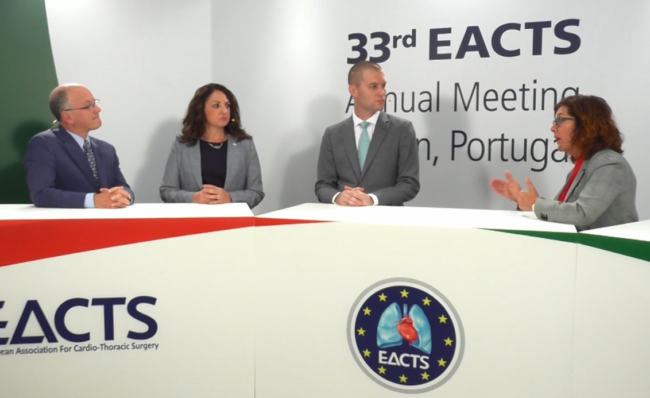
Filmed at the 2019 EACTS Annual Meeting in Lisbon, Portugal, Patrck O. Myers of the Lausanne University Hospital in Switzerland moderates a discussion on the different options for managing the aortic valve in children. He is joined by David Kalfa of Columbia University in New York, Rudolf Mair of Linz, Austria, and Christian Brizard of Royal Children’s…
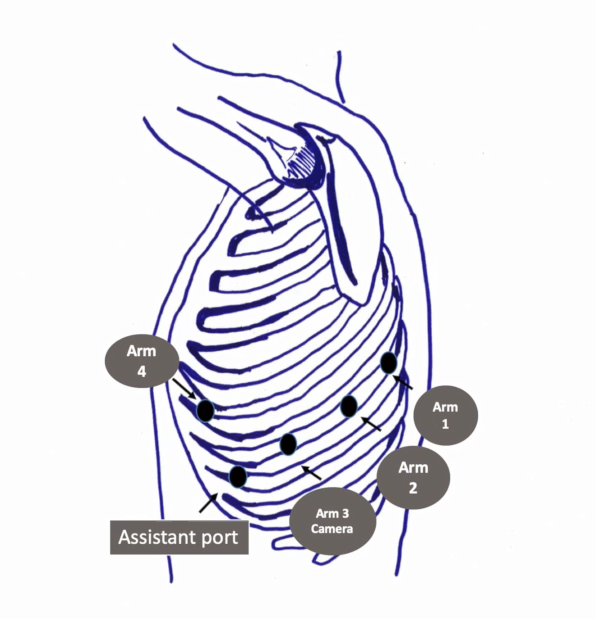
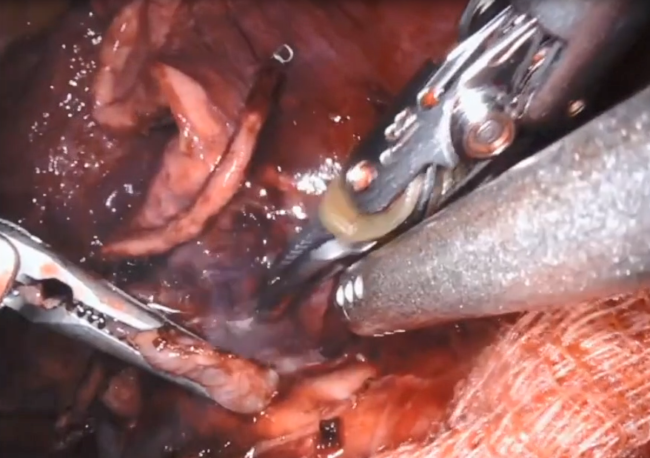
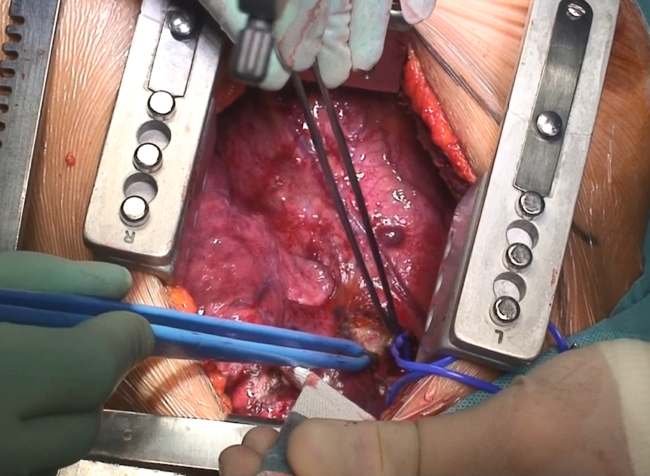
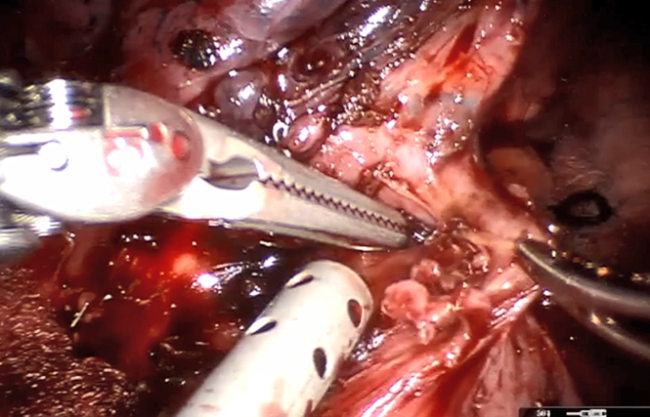
This video demonstrates a patient who underwent a robotic right lower lobe sleeve resection. The patient had a carcinoid tumor in the bronchus intermedius coming from the right lower lobe, which necessitated the division of the bronchus intermedius, the resection of the right lower lobe, and then the suturing of the middle lobe bronchus back…
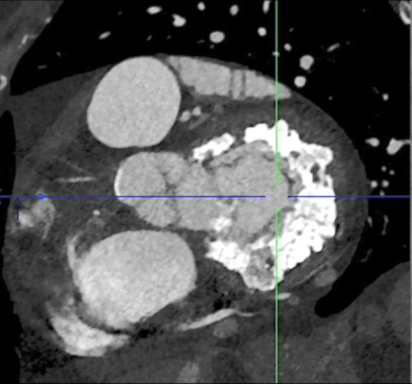
Mitral valve replacement (MVR) in patients with mitral annular calcification (MAC) poses a significant surgical challenge. A direct transatrial transcatheter mitral valve replacement (TMVR) approach with resection of the anterior leaflet of the mitral valve has been described (1, 2). Patients with MAC usually have small hypertrophic ventricles at risk of left ventricular outflow tract…
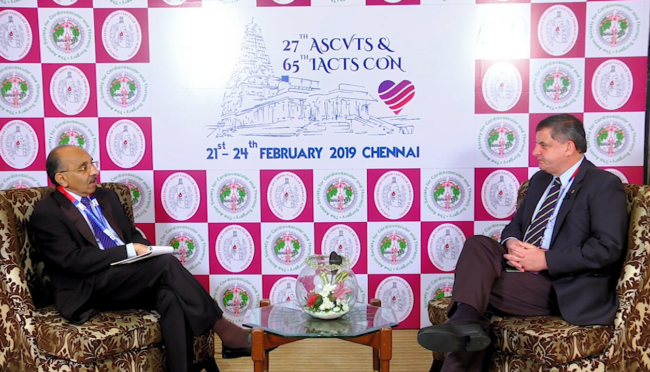
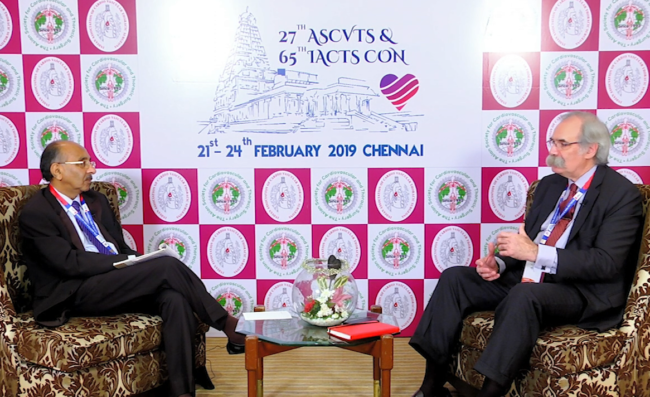
Dr Om P. Yadava, CEO and Chief Cardiac Surgeon of the National Heart Institute in New Delhi, India, and Editor-in-Chief of the Indian Journal of Thoracic and Cardiovascular Surgery, and Professor Rui Almeida, President of the Brazilian Society of Cardiovascular Surgery, discuss the reasons for a lack of trainee interest in the specialty of cardiovascular…
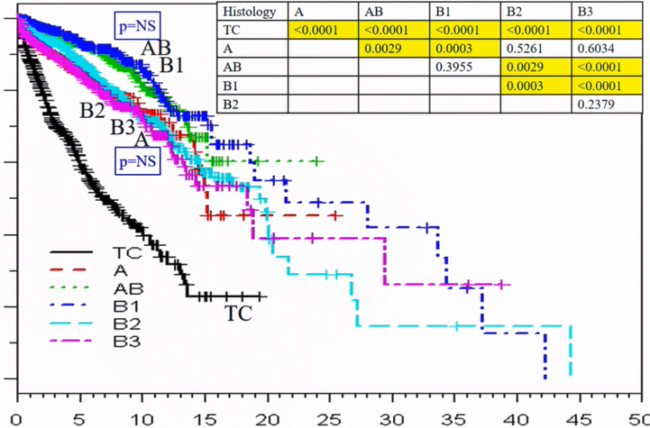
Joseph Shrager of Stanford University in California presents a discussion on the International Thymic Malignancy Interest Group’s influence on the management of thymoma. He discusses the background and goals of the International Thymic Malignancy Interest Group and explains the steps they are taking do develop global standards and databases. This presentation was originally given during…
Partial anomalous pulmonary vein connection (PAPVC) is due to the failure of one or more of the pulmonary veins to be incorporated into the left atrium, thus flowing into the systemic circulation (1). The incidence of PAPVC at autopsy is between 0.6% – 0.7%, and on the right side is twice as common as PAPVC…
Dr Om P Yadava, CEO and Chief Cardiac Surgeon of the National Heart Institute in New Delhi, India, and Editor-in-Chief of the Indian Journal of Thoracic and Cardiovascular Surgery, discusses mitral annular calcification with Dr Carlos Mestres, Senior Cardiothoracic and Vascular Surgeon of the University Hospital Zurich in Switzerland. Whether mitral annular calcification (MAC) is…
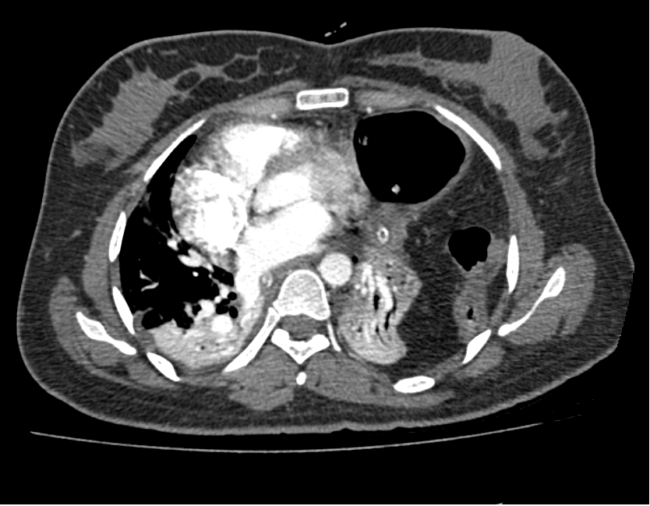
Introduction: Any abnormal defect in the diaphragm that may cause protrusion of abdominal contents into the thoracic cavity is known as a diaphragmatic hernia. Diaphragmatic hernias may be congenital or acquired. Acquired diaphragmatic hernias may be traumatic or iatrogenic, while spontaneous diaphragmatic hernias are rare. The authors present the case of a spontaneous acquired diaphragmatic…
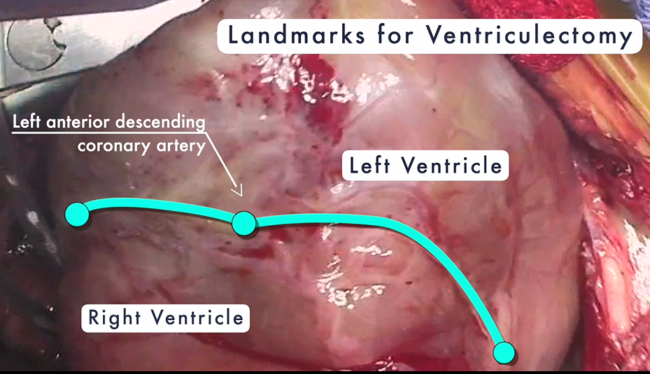
The Batista procedure, or ventriculoplasty, was originally described by Dr Randas Batista and colleagues as a treatment for ischemic dilated cardiomyopathy. There have been only a few case reports for this strategy in the management of neonatal dilated cardiomyopathy. Even fewer cases have been reported of a combined Norwood and Batista procedure for the management…
Filmed at the 2019 EACTS Annual Meeting in Lisbon, Portugal, Jill Ley of California Pacific Medical Center in San Francisco, California, moderates a discussion on pain management strategies that include reduced or no opioid use. She is joined by Daniel Engelman of Baystate Medical Center in Springfield, Massachusetts, Cheryl Crisafi of Baystate Medical Center, and Michael Grant of Johns…
Find it here: the 2019 International Thoracic Oncology Symposium, formerly the VATS Symposium, taking place in Milan, Italy. Friday, November 8, 20198:45 am – 4:10 pm CEST (1:45 – 9:10 am CST) Tune in for select sessions under the following categories: Lung Cancer Treatment: Where to Improve9:00 – 11:00 am CEST (2:00 – 4:00 am CST) How…
This video demonstrates the resection of a proximal typical carcinoid tumor of the singular bronchus that required the bronchus to be cut and then sutured closed. Since suturing was required, the author used the Si Robotic system, which is ideally suited for suturing. The distal lingular tissue had also been chronically collapsed, so there were…


 welcomes you to the new, improved website!