Content from the Journal of the American Neurological Surgeons.
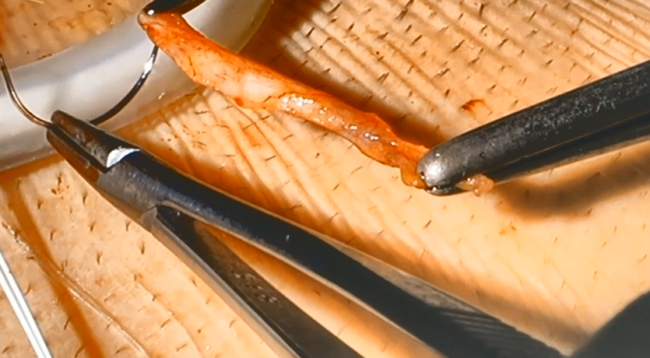
Several techniques have been introduced for the selection of the right length of neochords, which is an essential part of complex mitral valve repair. In most traditional techniques, the judgement of the necessary length is done during the repair, and then the neochords are tied and their length is fixed, so it is difficult or…
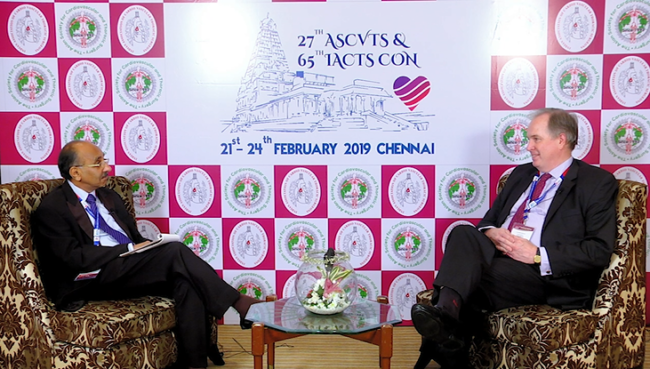
Dr Om P. Yadava, CEO and Chief Cardiac Surgeon of the National Heart Institute in New Delhi, India, and Editor-in-Chief of the Indian Journal of Thoracic and Cardiovascular Surgery, and Mr Clifford Barlow, Senior Consultant Cardiac Surgeon at the University Hospital in Southampton, UK, discuss ways to increase the uptake of multiarterial grafting in CABG…
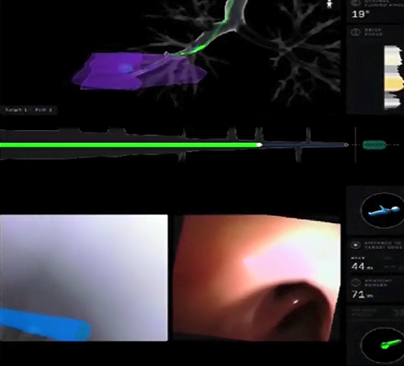
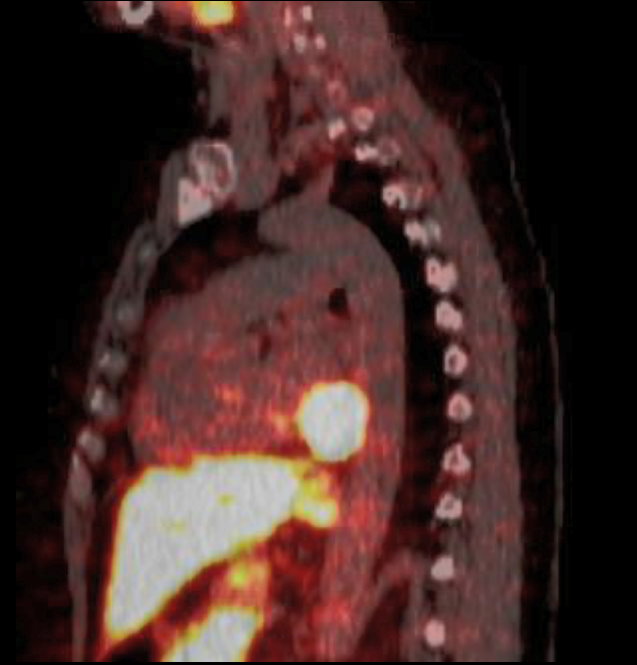
The authors present a case of Ion robotic bronchoscopy and robotic lung resection for a solitary pulmonary nodule. The patient was a 68-year-old man and never smoker who presented with an enlarging right lower lobe solitary pulmonary nodule. It was first seen on chest x-ray in 2016 and enlarged on serial imaging to its greatest…
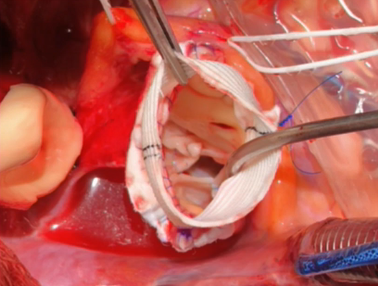
Marc R. Moon of the Washington University School of Medicine in St Louis, Missouri, USA, presents a discussion on the surgical repair options for aortic regurgitation. He discusses the anatomy of the aortic valve and the current guidelines for surgery. This presentation was originally given during the SCTS Ionescu University program at the 2019 Annual…
A 74-year-old man with persistent atrial fibrillation, severe tricuspid regurgitation (TR), and pulmonary hypertension underwent a convergent procedure (CP). The CP is a closed chest, transdiaphragmatic laparoscopic hybrid epi- and endocardial ablation procedure for the treatment of complex atrial fibrillation that has been shown to be safe and effective (1). To gain access to the…
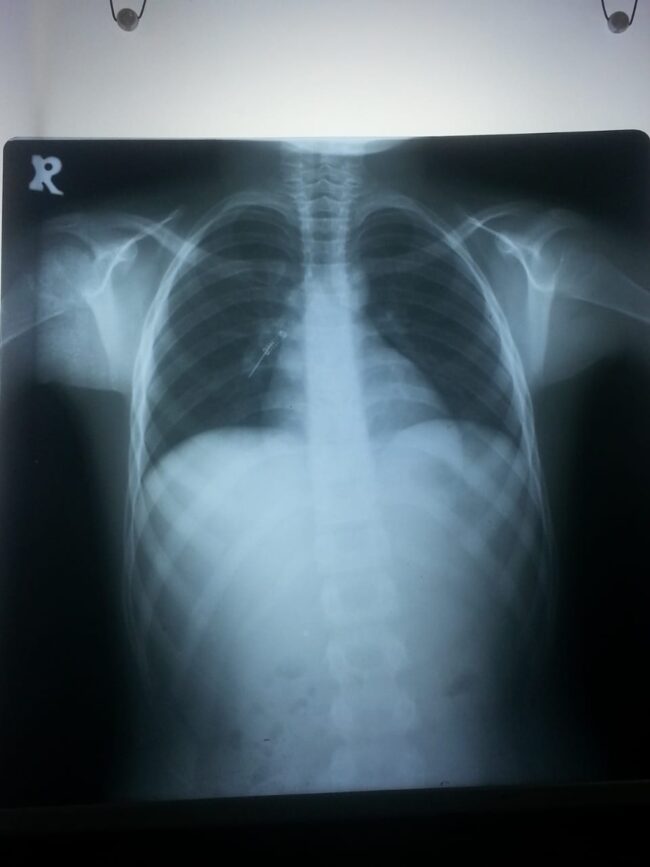
The authors present the case of the extraction of a double metal foreign body following inhalation by a 4-year-old child (metal pin and metal spiral shaped object) in his right bronchus. A foreign body (FB) inhalation is a common event, especially among children and young adults. Two metallic FB inhalations in children have rarely been…
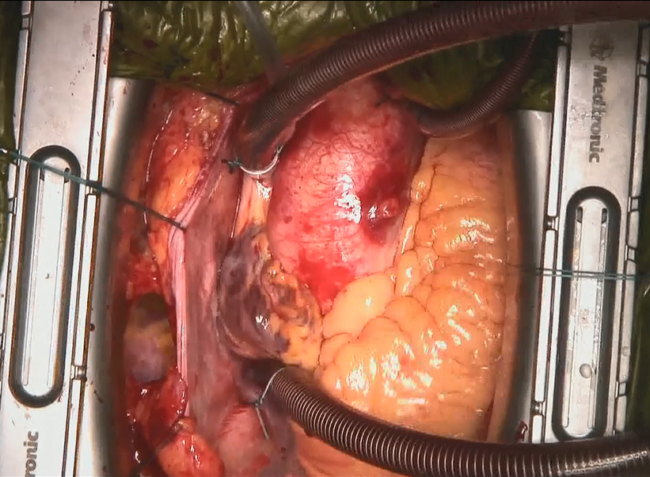
A 59-year-old woman presented with distressing palpitations. Workup revealed a paraganglioma in the posterior left atrioventricular groove. Resection was undertaken en bloc with part of the coronary sinus wall. Reconstruction with autologous pericardium was done. The patient had a smooth recovery.
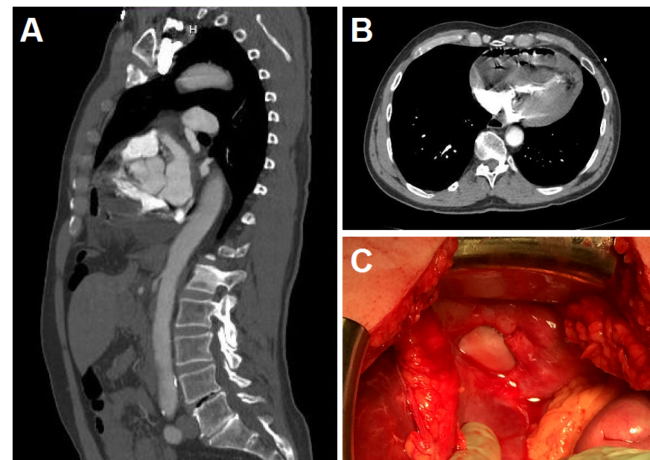
Aortic coarctation is one of the most common congenital anomalies. The incidence of coarctation of the aorta is 4 in 10,000 live births, accounting for 5–8% of the children with congenital heart defects (1). During adult life, the presentation of coarctation mostly represents re-coarctation following previous therapy or missed cases of native coarctation. Patients who…
Diane Barker of University Hospitals of North Midlands in the United Kingdom presents a discussion on genetic testing for those at risk of thoracic aortic disease. She discusses the importance of clinical screening and gene testing for family members of patients who present with either a dissection or a known aneurysm. This presentation was originally…
Find them here: outstanding sessions from the 33rd EACTS Annual Meeting which took place in Lisbon, Portugal: Thursday, October 3rd3:30-5:00 pm CEST (8:30-10:00 am CDT)Practical Approach to Challenging Aortic Valve Surgery Friday, October 4th12:30-1:15 pm CEST (5:30-6:15 CDT)Presidential Address Saturday, October 5th10:45 am -12:15 pm CEST (3:45-5:15 am CDT)Da Vinci Session 12:45-2:15 pm CEST (5:45-7:15…
The pulmonary autograft operation was introduced by Donald Ross in 1967. Since then, the Ross operation has become a viable and durable option for aortic valve replacement in both the pediatric and adult populations (1). Pulmonary autograft dilatation is one of the complications noted in the adult population. Because of this, the Ross operation is…
While the number of minimally invasive interventions being offered is gradually growing, patients’ requests for interventions associated with minimized trauma and faster recovery often remain unfulfilled (1). Currently, most lines of progress in minimally invasive mitral valve interventions always involve more sophisticated and complex endoscopic support. Although such techniques are very elegant and are associated…
The central patch technique is an alternative to other accepted techniques for the complete repair of atrioventricular septal defects (ASD). This technique is particularly suited for patients with large Rastelli A defects, as it allows for excellent exposure of the ventricular crest, while maintaining the physiologic height of the atrioventricular (AV) valve tissue above the…
Thomas Modine of the Regional University Hospital of Lille in France presents a discussion and demonstration of his modified valve sparing technique for aortic valve replacement that employs the 3f Enable valve. He emphasizes the need for a technique that is easy, reproducible, and effective, and discusses the benefits of selecting his method. This presentation…
The Second International Conference on Sublobar Resections for Lung Cancer was held in New York City, USA, on September 26-27, 2019. Presentations from the meeting streamed live on CTSNet. Watch these sessions below or in the CTSNet YouTube channel. Previously streamed sessions included: Sublobar Resection: Indications Competing Techniques Basic Considerations Technique: New Tricks for Nodule…
Pneumonectomy is defined as the removal of the entire lung. This surgical procedure can be performed intrapericardially or extrapericardially and is associated with the radical dissection of the mediastinal lymph node without the resection of the mediastinal chest wall or the diaphragm. Pneumonectomy remains the main surgical choice for managing locally advanced lung cancer that…